The useful starting point
Verify the work against the written scope: moisture repairs, completed removal or cleaning, accessible conditions and any required assessment. Ask for limitations and outstanding items in writing before reconstruction. A lab result or fresh coating should not stand alone as proof that the whole project is complete.
Begin with the scope you authorized
Bring the original estimate, amendments and photographs to the completion discussion. Match each area to the work promised. If the scope named a closet, wall cavity and adjacent room, all three should have an explanation, even if one ultimately needed no treatment.
Make a short list of outstanding questions before the walkthrough. Was an inaccessible space later opened? Did removal extend beyond the original boundary? Were stored contents included or excluded? Changes are easier to understand when tied to a room and a documented reason.
If several companies took part, identify the person responsible for assembling the final record. Separate invoices can leave gaps between the moisture repair, remediation and rebuilding stages. You need to know who verified each handoff, not merely who billed for it.
Verify the moisture repair independently of appearance
EPA's completion guidance starts with correcting the moisture problem. Ask what caused the wet condition, what repair addressed it and how that repair was checked. If the cause remains uncertain, it should remain an open item in the record rather than disappearing beneath a new finish.
The cleanup company may not have performed the plumbing, roof or ventilation repair. Request the relevant trade's findings and invoice, plus any recommended follow-up. A cleaned wall and a repaired pipe are two separate deliverables.
Discuss conditions that have not yet occurred since repair. A roof detail may need observation during rain; a seasonal condensation issue may need later review. That uncertainty can be managed with an agreed follow-up plan without pretending that a single dry-day visit answers everything.
Look at the accessible result without disturbing it
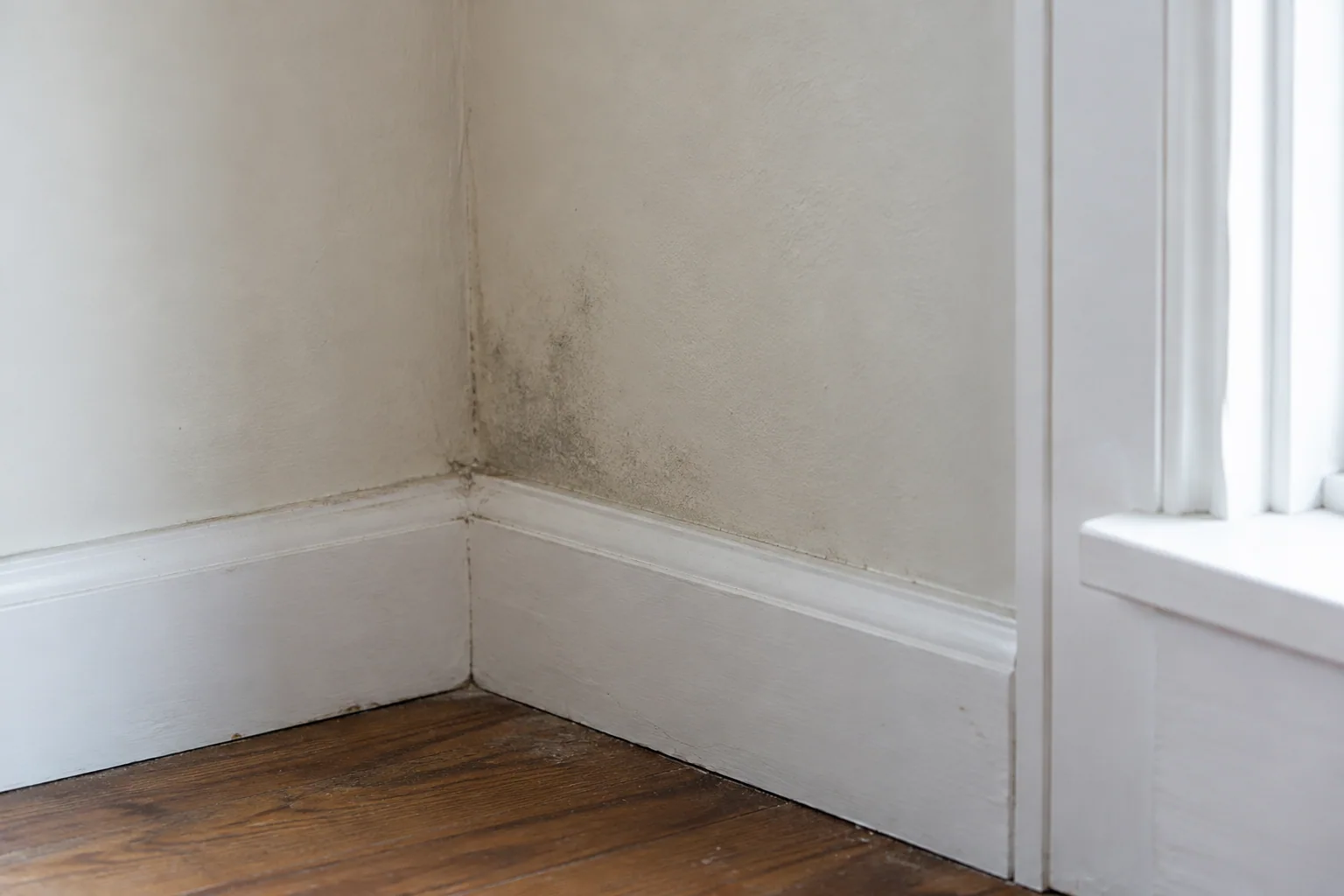
Ask the remediator to walk you through the accessible areas and explain the condition of retained material. EPA notes that visible growth and moldy odors should be absent after cleanup, while some cosmetic staining may remain. An explanation of a remaining mark should be specific to that surface.
Do not dismantle containment, lift suspect debris or enter restricted work areas to perform your own inspection. Agree on safe access with the contractor. If independent verification was included, wait for the assessor's instructions about which controls need to remain in place.
Use photographs to record what you can review safely. Wide views, labeled details and the date are more useful than a large folder of unidentified close-ups. Ask for images of areas that will be hidden by insulation, cabinetry or wallboard.
| Completion evidence | What it helps establish | What it cannot establish alone |
|---|---|---|
| Source-repair record | What was repaired and by whom | The condition of every affected material |
| Visual assessment | Accessible surface condition | All concealed conditions |
| Moisture readings | Condition at documented locations and time | A permanent guarantee against leaks |
| Targeted sampling report | Answer to the defined sampling question | A universal federal pass/fail result |
| Follow-up plan | Who checks unresolved or seasonal issues | That future maintenance is unnecessary |
Understand any independent assessment
If a separate assessor was engaged, ask whether their role included reviewing the scope, inspecting the work, sampling or all of these. Clarify who hired them and who receives the complete report. Independence is most useful when the task and decision criteria were established before cleanup ended.
EPA explains that there are no federal airborne mold standards for a simple compliance determination. When sampling is used, the report should explain the question, locations, methods and interpretation. A number on a laboratory sheet is not a complete building assessment.
Ask the assessor to name limitations in ordinary language. For example, note a wall that was inaccessible or a repair that could not be observed under relevant weather. Those limits should guide the next decision rather than be buried behind an unconditional-sounding certificate.
Set a clear release point for rebuilding
Closing a wall is a decision point. Name the person who can release the area for reconstruction and agree on the evidence they need. Give the builder the cleanup findings and relevant moisture records directly, rather than relying on a verbal message passed through several crews.
Ask what will happen if reconstruction reveals an additional affected area. Agree on a pause, documentation and approval process so that the response is consistent with the original work. A discovered condition is easier to manage when nobody feels obliged to hide it to keep the schedule moving.
Replacement finishes also need appropriate installation conditions. Ask the installer to verify the requirements for the chosen flooring, paint, adhesives or insulation. The end of remediation and readiness for a particular finish are related decisions, but they are not automatically the same date.
Return contents with a record
Review belongings separately from the room. Identify which items were cleaned, which remained elsewhere during the project and which were discarded with authorization. Returning an unresolved item can make it difficult to interpret a new odor or complaint after the room reopens.
Use the inventory to check item locations and condition. Open questions about valuable or sentimental pieces should go to the appropriate specialist before routine unpacking. If contents treatment was excluded, do not assume the building contractor has judged those possessions.
For occupants with health concerns, seek personal advice from a healthcare professional about returning to the space. A contractor can report the work and building observations but cannot guarantee how every individual will respond.
Keep a short follow-up file
Save the final scope, photographs, repair records, assessment and operating instructions in one folder. Include the names of the people responsible for future questions and the terms of any warranty. A compact index makes the file usable when the next plumber or owner needs it.
Agree on what to watch for and how to report it: new water, a returning odor, fresh discoloration or equipment failure. Record observations promptly and send them with the original location reference. Avoid altering a recurrent area before the responsible professional has advised how to document it.
Schedule any promised revisit and distinguish it from ordinary household maintenance. The project record should show which tasks the contractor will perform and which controls the owner must maintain. That closes the work with responsibilities that someone can actually follow.
Your field checklist
- Match every area to the approved scope and amendments.
- Collect the moisture-source repair record.
- Review remaining stains and inaccessible areas with the assessor.
- Understand the purpose and limits of any sampling.
- Set the authorization point for reconstruction.
- Keep contents decisions and follow-up responsibilities in the final file.
A few common questions
Is an air test required after every mold cleanup?
Not as a universal federal requirement. Whether testing is useful depends on the job, agreed assessment plan and applicable project requirements. Ask what question the test would answer and how its results will be interpreted with the inspection.
Does a remaining stain mean cleanup failed?
Not automatically. EPA notes that cosmetic staining can remain. Ask the professional to explain the specific mark and the evidence supporting the completed work; do not accept appearance alone as proof either way.
Sources & further reading
- A Brief Guide to Mold, Moisture and Your HomeU.S. Environmental Protection Agency
- Mold Testing or SamplingU.S. Environmental Protection Agency
- Mold Cleanup in Your HomeU.S. Environmental Protection Agency
This guide supports informed conversations about your home. Conditions, materials and local requirements vary; an on-site assessment is necessary for decisions about a particular property.