The useful starting point
A plumbing repair closes one part of a water-damage job. Before the next crew starts, identify who has checked the affected materials, what remains unresolved and who can authorize further work. The finish contractor needs the drying and cleanup records, along with a clear description of the repairs still required.
The pipe repair is one completed task
A plumber may leave a repaired supply line and a dry fitting while the floor beneath it remains wet. Those observations can both be correct. The repair addresses the source; deciding what to do with the room involves the materials the water reached. An invoice saying that a valve was replaced does not describe the condition of insulation, a ceiling cavity or the flooring below.
Start by separating four decisions: whether the source is controlled, whether affected materials need drying or removal, whether mold cleanup is necessary, and whether the remaining surfaces can receive new finishes. Different people may make each decision. If water reached electrical fittings or a ceiling is sagging, access also needs a separate safety assessment. A plumbing repair alone does not settle those concerns.
Ask the plumber for a record of what was fixed
Request a short service note identifying the failed component, its location, the work performed and how the repair was checked. It should distinguish a permanent repair from a temporary isolation or patch. If a fixture must remain unused, the next crew needs that instruction before someone turns it on while cleaning the room.
Ask the plumber to record the limits of the visit as well. Was another suspected leak left for investigation? Was access available to the pipe beyond the opening? A note that a concealed connection was not inspected is more useful than an assumption that the whole plumbing system has been cleared. Keep dated photographs of the repair and opening when the contractor can provide them safely.
The owner or manager should send that note to whoever assesses the damaged materials. There is no need to wait for a polished report before sharing urgent findings: a brief written update can go first, with the invoice and photographs following. The important distinction is between a confirmed repair and a question that still needs an answer.
Give one person the coordination job
Name one contact who keeps the work moving: the homeowner, a property manager or a contractor whose agreement includes coordination. That person collects records, arranges access and tells the next trade what is ready. They do not replace the judgment of the plumber, drying technician, electrician or other specialist responsible for a particular task.
A restoration company in Boston, such as Boston Restoration Group, may handle several stages of the work. Ask who will oversee each stage and which tasks are subcontracted or excluded. Even when one company provides both drying and repairs, the incoming crew needs the earlier crew's findings and a list of unresolved items.
Use a small handoff record for each affected room. The following entries are useful project records to request; they are not a universal certificate or a substitute for inspections required for the actual work.
| Handoff | Record the next person needs | Decision still to make |
|---|---|---|
| Plumber to drying team | Source, repair, checks performed and restrictions | Where did the water travel? |
| Owner or manager to crews | Access permission, contacts and approved scope | Who approves newly discovered work? |
| Drying team to remediation team, if needed | Affected locations, observations and material history | What cleanup and protection are necessary? |
| Drying or remediation team to repair contractor | Completion findings, moisture records and unresolved areas | Which assemblies are ready for repair? |
| Repair contractor to owner | Finished scope, outstanding items and care instructions | What follow-up or other trade remains? |
Show the next crew where the water traveled
The next assessment should connect the repaired source with the materials and rooms below or beside it. Ask for locations that everyone can recognize: the bedroom ceiling beneath the bathroom, the wall behind the vanity, the hallway floor edge. Record inaccessible areas separately. A drawing with labeled photographs is easier for a repair contractor to use than a folder of close-ups without room names.
Boston Restoration Group's water damage restoration service description includes moisture assessment, drying and repair planning. For a particular job, the written scope should identify which of those tasks the crew will perform and what record it will leave. Our guide to the structural drying process explains the measurements in more detail. Here, the practical question is who receives those findings and acts on unresolved areas.
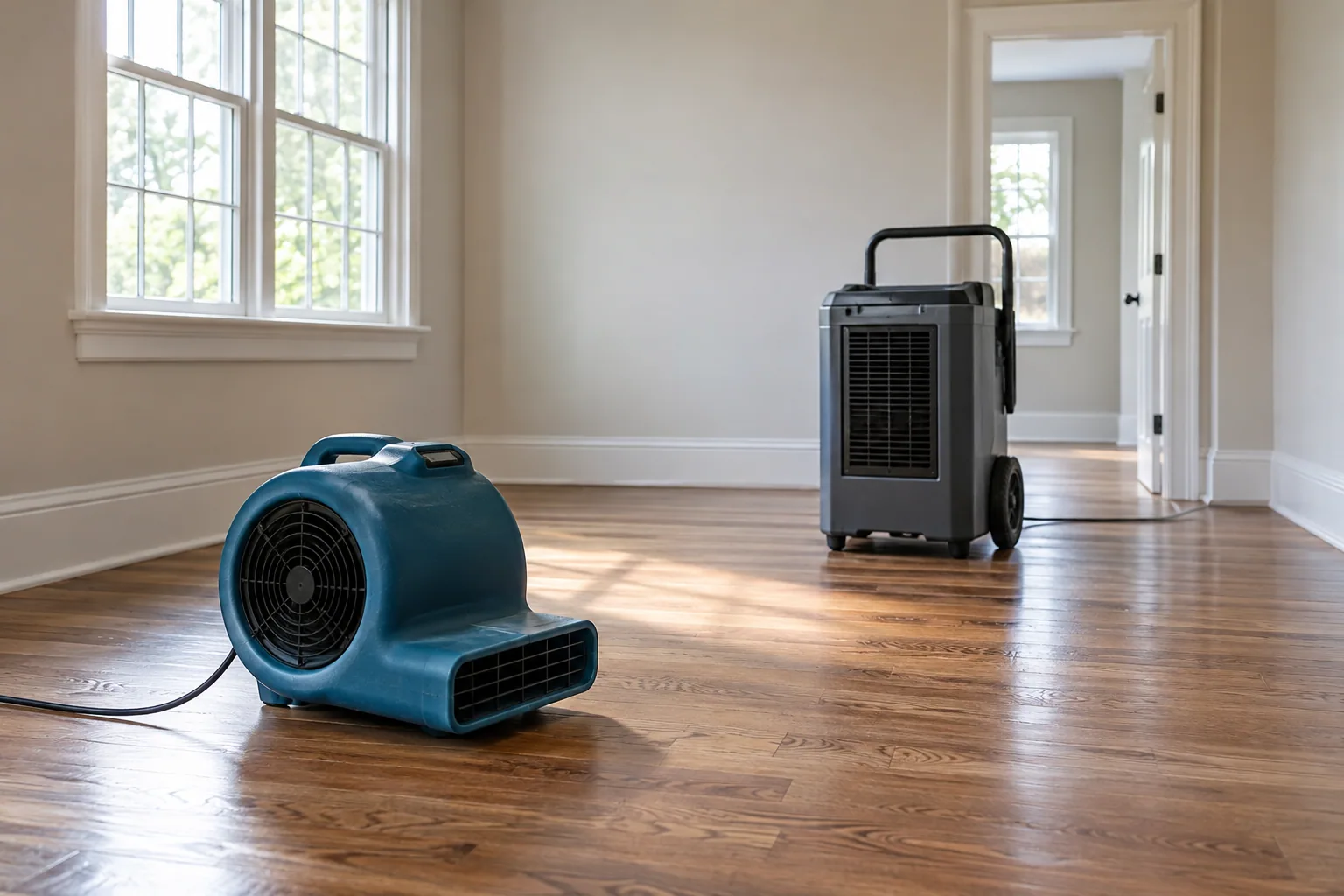
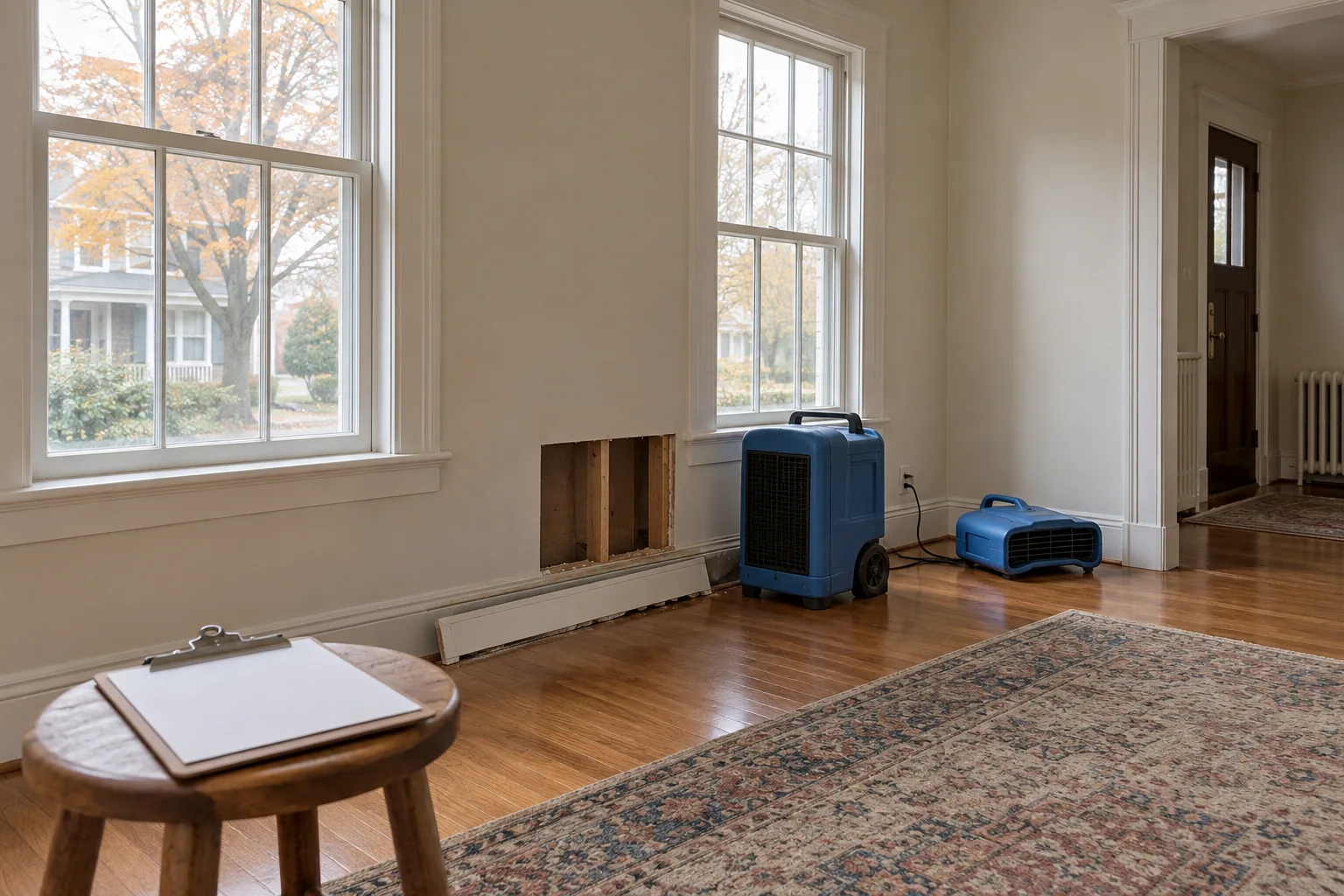
Before equipment is removed, arrange how the drying team will explain its completion decision. Request dated locations and readings, the basis used to judge the materials, and any areas excluded from assessment. Avoid a handoff that consists only of an equipment pickup time. The incoming contractor needs to know what that departure means for the wall or floor being repaired.
Let new findings change the scope before work continues
Opening a damaged assembly can reveal a different problem from the one visible at the start. Suspected hidden mold, an older moisture pattern or contaminated water should trigger a documented reassessment of the affected work. Have the crew record what it found and explain which planned tasks should pause. The homeowner should not disturb suspicious material to settle the question personally.
For a job that needs professional mold removal, Boston Restoration Group describes containment, cleanup and moisture control. The agreement for your room should name who defines the work area, protects adjacent rooms, handles affected materials and records completion. It should also say who repairs any continuing moisture source. That repair may belong to another trade.
EPA's household guidance ties completed remediation to correcting the moisture problem, removing visible growth and resolving moldy odors, with a later check for recurrence. It does not make air sampling a routine requirement whenever visible mold is present. Agree on the appropriate completion review before cleanup starts. A sampling result, if one is commissioned, needs professional interpretation and does not replace the record of what was repaired and cleaned.
In a condo, coordinate the units before closing either side
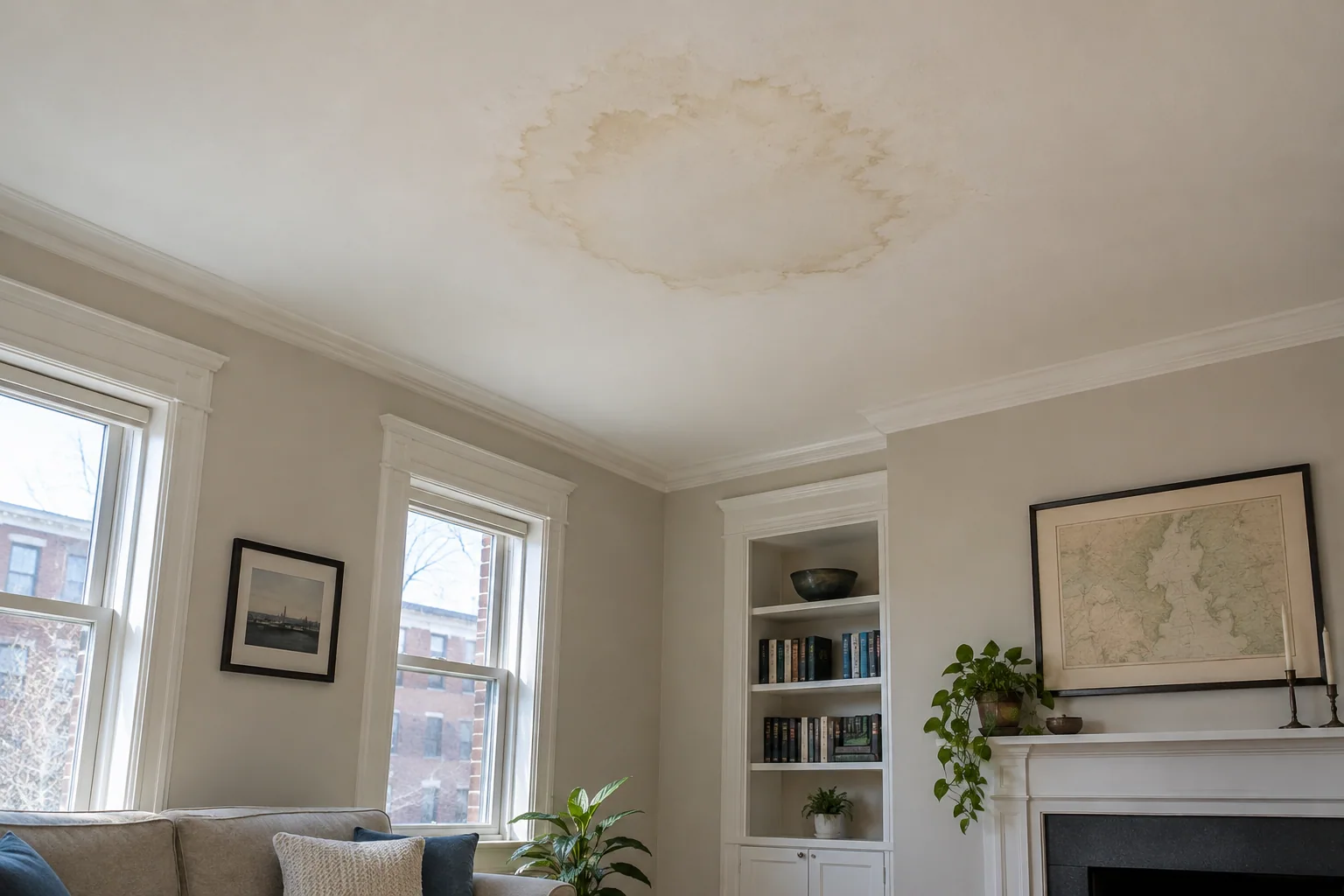
Consider a supply-line leak in an upstairs Boston condo that wets the ceiling of the unit below. The upstairs plumber may be finished while the lower unit still needs access, assessment and drying. The manager should help establish who can authorize work in each location and whether a shared chase or other common area is involved. Each crew needs the other unit's findings where they affect its work.
A useful handoff names both units, the affected rooms and the remaining access arrangements. It also records any building requirements for work hours, common-hall protection or contractor entry. If the lower ceiling is due to close before an unresolved connection above has been checked, put that conflict in writing and have the responsible trades resolve it. Otherwise, the same opening may be needed again.
Keep the decision to proceed with repairs separate from who pays. Massachusetts insurance guidance explains that condominium owners and associations may have different policies; the actual documents determine the applicable coverage. Where water appeared does not, by itself, settle coverage or responsibility. Share factual records with the relevant parties and follow their claim instructions. The guide to an upstairs condo water leak covers the earlier building-wide response.
Older houses need material decisions carried forward
In an older Somerville triple-decker or a Victorian house, a small plumbing opening may pass through plaster, lath and later alterations. Before expanding that opening, have the appropriate contractor assess the work and any suspect materials. Paid work that disturbs paint in pre-1978 housing can trigger lead-safe renovation requirements; Massachusetts operates its own authorized program. That question belongs before demolition, not after the debris has left.
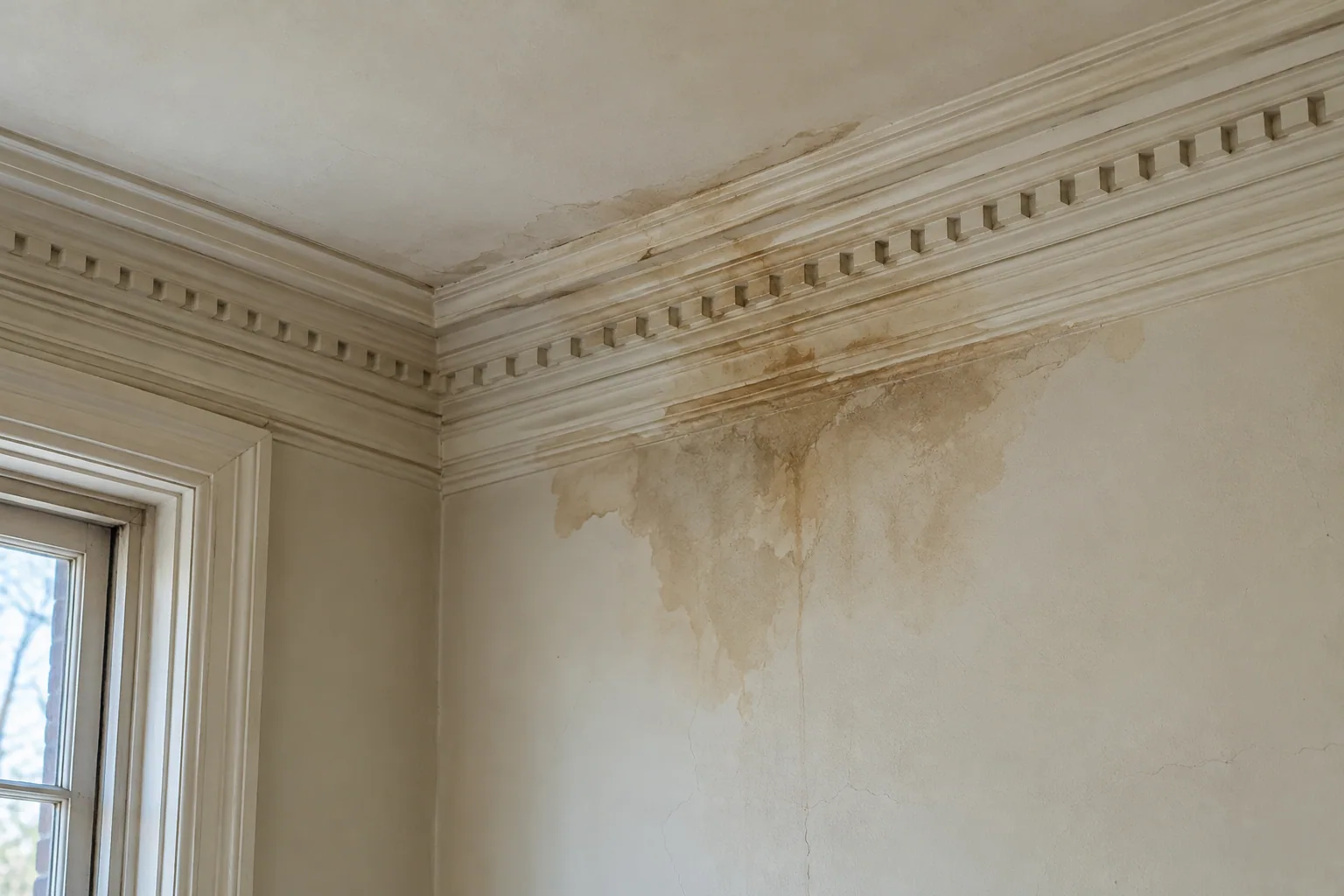
Suppose a plaster ceiling is being considered for retention after the leak. The drying team and plaster repair contractor need to discuss both moisture and the condition of the ceiling, then record the agreed repair extent. A decision to retain the visible plaster should not conceal an unresolved question about the cavity above it. Our guide to plaster after a water leak covers the material choices. Photograph retained details and identify trim to save before crews change.
Schedule a check before the room is closed up
Before insulation, wallboard or flooring covers the work, have the incoming repair contractor review the source-repair note, drying findings and any remediation record. Ask that contractor to identify additional checks needed for the proposed materials and any required inspections. EPA advises against closing flooded cavities or coating wet surfaces before they are dry internally. FEMA's mold guidance likewise places moisture correction and cleanup ahead of painting or caulking.
Arrange a walkthrough with both crews when possible. The drying technician may consider the assessed materials ready while the flooring installer still needs to check the surface beneath the new floor. Ask what each person assessed and which additional check remains. Assign that check before confirming the installation date. The owner should not have to guess which professional's answer covers the proposed flooring.
The repair scope should also account for what earlier crews removed: insulation, baseboards, access panels, cabinet sections and protective coverings. Identify who restores each item and whether any fixture needs a return visit from the plumber. Keep those assignments alongside the estimate so a small omission does not disappear between contracts.
At the final walkthrough, list unfinished items, who will complete them and the agreed follow-up. Retain the source-repair note and photographs of concealed work with the completion records. If staining or an odor returns, those records give the next professional a starting point: what was opened, what was retained and which locations were previously checked.
Your field checklist
- Identify the repaired source and any temporary restrictions.
- Name the coordinator and the person who can approve scope changes.
- Label affected rooms, inaccessible areas and shared building spaces.
- Send drying and cleanup findings to the incoming repair contractor.
- Resolve material checks and required inspections before closing assemblies.
- Assign every remaining repair and keep the concealed-work photographs.
A few common questions
Should the plumber hire the drying contractor?
Only if that arrangement is part of the agreed work. A referral does not establish who authorizes, supervises or pays for the next service. Ask who will contract with the drying company and who will receive its findings.
Can repair estimates be prepared while drying continues?
Yes, a contractor can plan and price the expected repairs while identifying assumptions. Label unresolved material quantities or conditions and agree how changes will be approved. Scheduling an estimate does not establish that the room is ready to close up.
What if a contractor leaves without a completion report?
Request the findings and records supporting the completed scope, including any limits. Give the next contractor the information available and identify what is missing. That contractor may need further assessment before accepting the surfaces for repair. Equipment removal alone does not tell the next crew which materials were checked.
Sources & further reading
- A Brief Guide to Mold, Moisture and Your HomeU.S. Environmental Protection Agency
- Flood Cleanup to Protect Indoor Air and Your HealthU.S. Environmental Protection Agency
- Lead Renovation, Repair and Painting ProgramU.S. Environmental Protection Agency
- Understanding Home InsuranceMassachusetts Division of Insurance
- Mold: Problems and SolutionsFederal Emergency Management Agency
This guide supports informed conversations about your home. Conditions, materials and local requirements vary; an on-site assessment is necessary for decisions about a particular property.