The useful starting point
Do not begin rubbing, sanding or broadly spraying fire residues. First follow safe-access instructions, document the surfaces and ask for a material-specific cleaning plan. The proposal should distinguish removable residue, permanent discoloration, finish damage and structural concerns, with an agreed process for deciding when replacement is necessary.
Preserve the surface before testing a cleaner
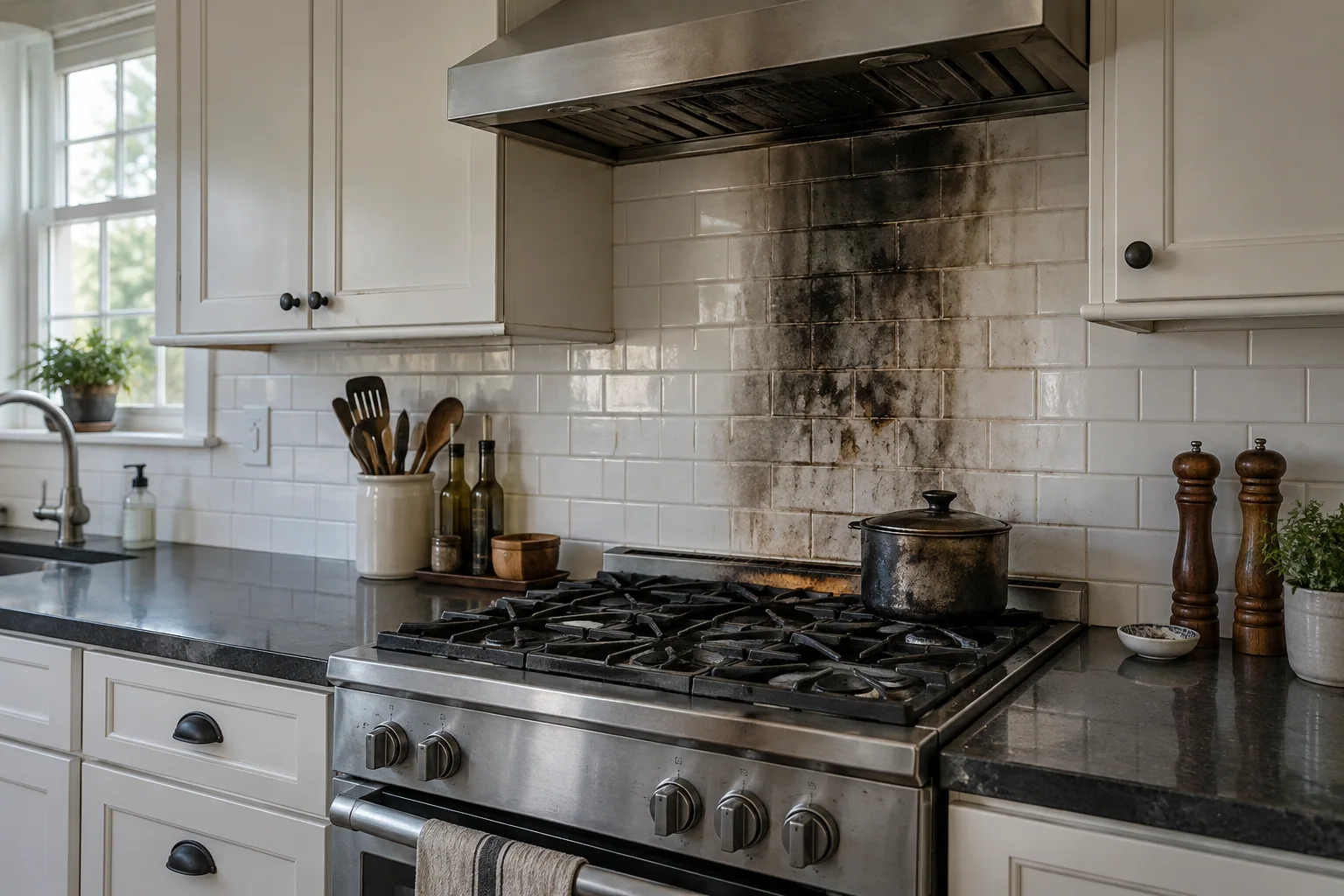
Once access is permitted, photograph affected surfaces before they are altered. Include a wide room view and a close view that shows the finish. Note whether the material is painted plaster, stained wood, stone, tile, wallpaper or fabric, and label uncertain materials as uncertain.
The U.S. Fire Administration warns that soot and dirty water after a fire may contain substances that can make people sick. Avoid casual contact or improvised cleanup while waiting for assessment. Keep children, pets and unnecessary visitors out of the affected area.
A swipe with a wet cloth may seem like a small test, but it can change a finish or leave a contrasting patch. Ask the restoration professional to choose and document an appropriate trial rather than using the most visible part of the wall to find out what works.
Separate residue from damage to the finish
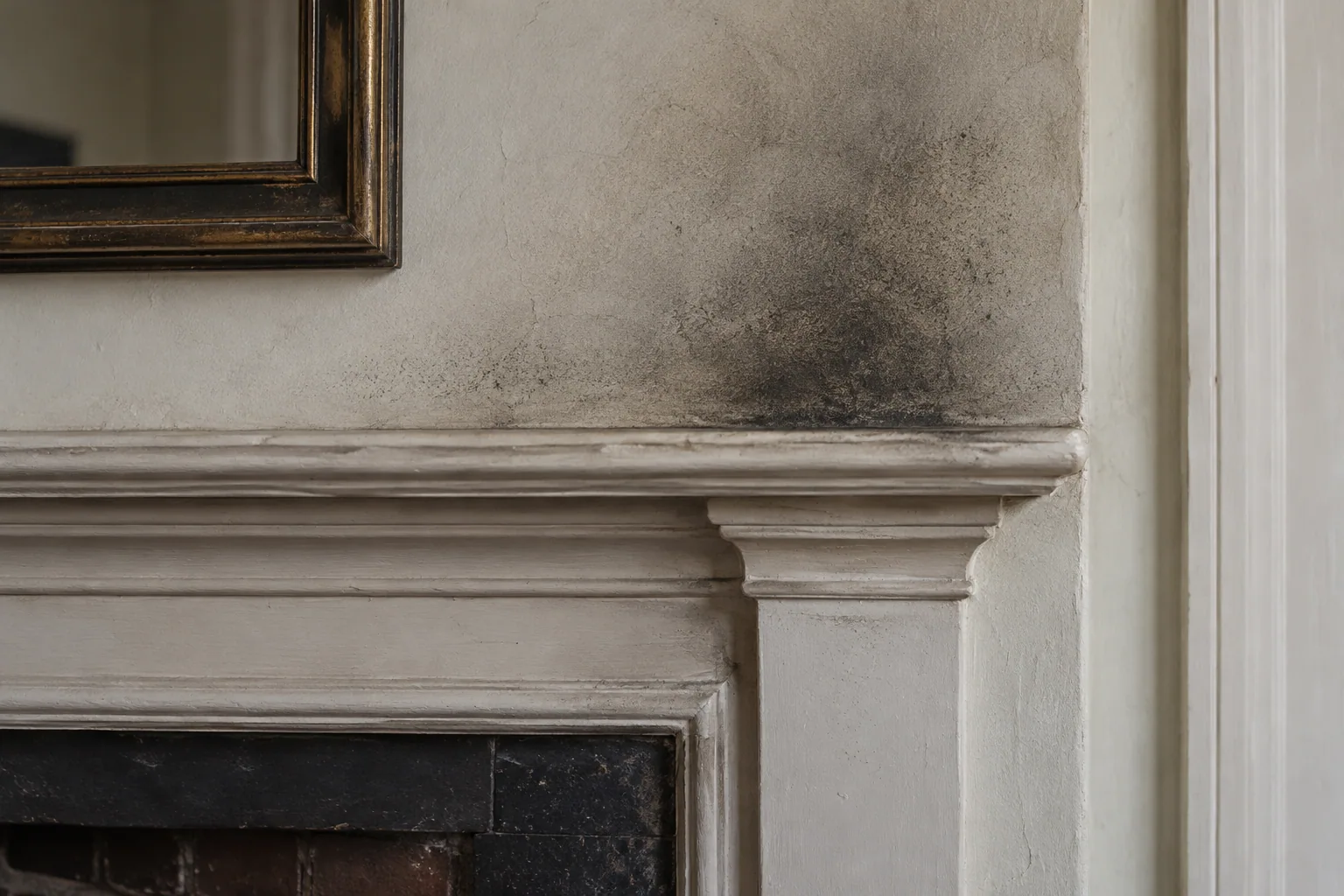
Ask the assessor to describe what is actually present. Material resting on a surface, discoloration within a finish, heat-related blistering and physical damage are different findings. A cleaning method may address one while leaving another that needs repair.
This distinction matters when reviewing photographs. A dark area does not establish how deeply the material is affected, and an area that looks lighter after cleaning is not automatically restored to its previous condition. Request a written description of the expected result.
Look for photographs taken before the loss. A family photograph, real-estate image or renovation record may show the same mantel, wall or cabinet. Keep the files unchanged. They can help distinguish an earlier scratch or aged finish from a change caused by the fire or subsequent handling.
Match the decision to the material
A proposal should identify groups of surfaces rather than say that the entire room will be washed. Ask about the finish, porosity, condition and manufacturer guidance where applicable. Those details influence whether a material can be treated in place, needs specialist attention or should be replaced.
For a historically significant or sentimental feature, raise its importance before work begins. A decorative plaster cornice or original door can require a different decision from replaceable sheet material. Request the appropriate conservation input if routine restoration methods may change the object.
The table is a guide to questions, not a cleaning recipe. The professional should decide the method after assessing the actual surface and fire exposure.
| Surface | Question before treatment |
|---|---|
| Painted plaster | Is the paint intact, and will the proposed method change it? |
| Original wood trim | What finish is present and can a controlled trial be evaluated? |
| Wallpaper or porous board | Can the material reasonably be restored, and what lies behind it? |
| Stone, tile or grout | Are finish, joints or adjacent materials sensitive to the method? |
| Electronics or appliances | Does a qualified technician or manufacturer need to assess reuse? |
| Textiles and upholstery | Should a contents specialist evaluate treatment away from the room? |
Agree on a trial and an appearance standard
When appropriate, ask the contractor to select a limited test area and record its location, method and result. Review the trial under ordinary lighting before authorizing the same approach across a larger surface. A sample gives both parties a clearer basis for expectations.
Discuss acceptable remaining discoloration, sheen changes, texture and the boundary between cleaned and untouched material. If matching is unlikely, ask how that affects the repair proposal. The decision may involve refinishing a larger area, specialist work or replacement, depending on the material.
Do not expect a universal promise that all original finishes will look new. The goal should be a documented result suited to the surface and the loss. Make sure the estimate identifies which cosmetic work follows cleaning and whether it is included.
Protect old materials during access and removal
Fire cleanup in an older home may uncover paint layers, pipe coverings or other suspect materials. Discuss these before sanding, cutting or demolition begins. EPA's lead renovation program covers many paint-disturbing projects in pre-1978 housing, and asbestos concerns require appropriate assessment rather than identification by appearance.
Ask who determines the applicable precautions and how they affect the sequence of work. A cleaning contractor, hazardous-material specialist and carpenter may have different responsibilities. The estimate should avoid leaving a necessary assessment between their scopes.
In a shared building, plan the movement of debris and equipment through common areas. Identify how occupied rooms and neighboring units will be protected and who communicates restrictions. The route out of the building is part of the work, not an incidental detail.
Keep contents and installed surfaces coordinated
Removing furnishings can expose areas that were hidden during the first inspection. Ask the crew to document newly visible conditions and notify the person controlling the scope. The same applies when trim, cabinets or appliances are removed for access.
Track loose items separately from installed features. A chair, framed print and lamp need inventory identifiers if they leave the home, while a mantel or cabinet belongs in the building repair record. Mixing these categories makes it harder to determine what was cleaned and where it went.
Decide who inspects cleaned contents before they return to a finished room. Unresolved items should not be placed back by default, and the return schedule should account for the room's readiness. This coordination avoids using the restored living space as a sorting area.
Review what the final invoice actually represents
At completion, compare the surface list with the approved scope and test results. Ask the contractor to identify retained discoloration, finish repairs, replaced materials and any untreated areas. Photographs before and after each major stage make the result easier to evaluate.
A coating or fresh paint changes what can be seen. Request the record of the underlying condition before that stage, along with the product information and any maintenance or warranty instructions relevant to the finish.
If residues or damage remain, describe the exact location and surface in the follow-up request. Keep the discussion tied to the agreed outcome and supporting photographs. That gives the contractor a concrete issue to inspect and keeps cosmetic differences from being confused with unresolved building work.
Your field checklist
- Photograph affected surfaces before touching them.
- Record material and finish, including uncertainty.
- Request a separate method for each relevant surface group.
- Review an appropriate trial before broad treatment.
- Resolve older-material concerns before disturbance.
- Document the condition before coating or reconstruction.
A few common questions
Can I repaint a soot-marked wall immediately?
Ask for assessment and suitable surface preparation first. Paint can hide what remains without resolving the condition beneath it. The contractor should explain the sequence for cleaning, any necessary repair and the selected finish.
Is every smoke-marked wooden feature a total loss?
No universal rule follows from appearance. The decision depends on exposure, condition, finish and the achievable result. Ask for a material-specific assessment and specialist advice where the feature has historical or sentimental value.
Sources & further reading
- After the FireU.S. Fire Administration
- Lead Renovation, Repair and Painting ProgramU.S. Environmental Protection Agency
- Protect Your Family from Exposures to AsbestosU.S. Environmental Protection Agency
This guide supports informed conversations about your home. Conditions, materials and local requirements vary; an on-site assessment is necessary for decisions about a particular property.