The useful starting point
Preserve sound original plaster where inspection supports it, but treat sagging, loose or actively leaking ceilings as hazards. A qualified plaster specialist should assess attachment and condition after the source is controlled. Drying and any necessary concealed-space cleanup come before patching, priming or repainting the visible stain.
A stain and a loose ceiling are different findings
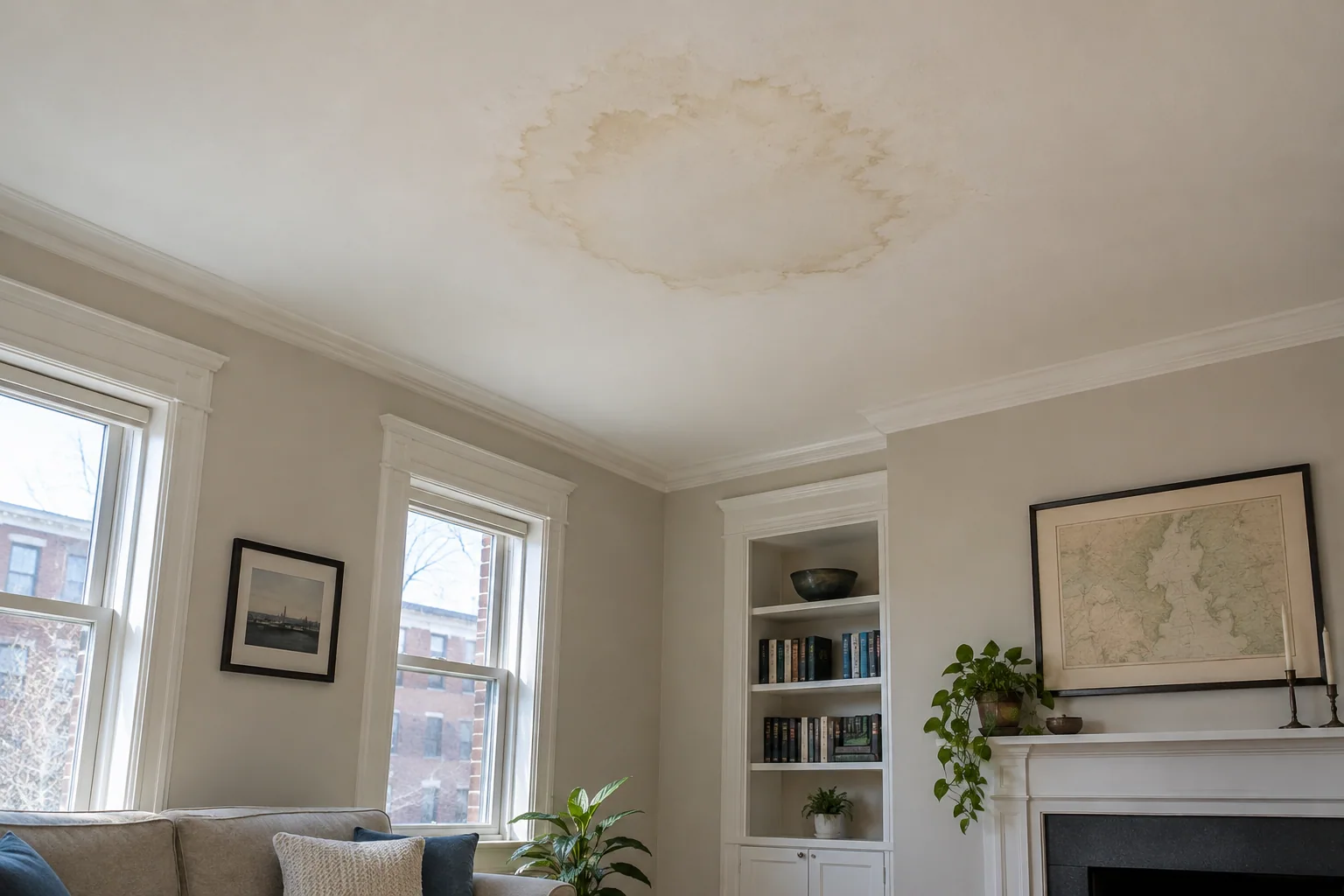
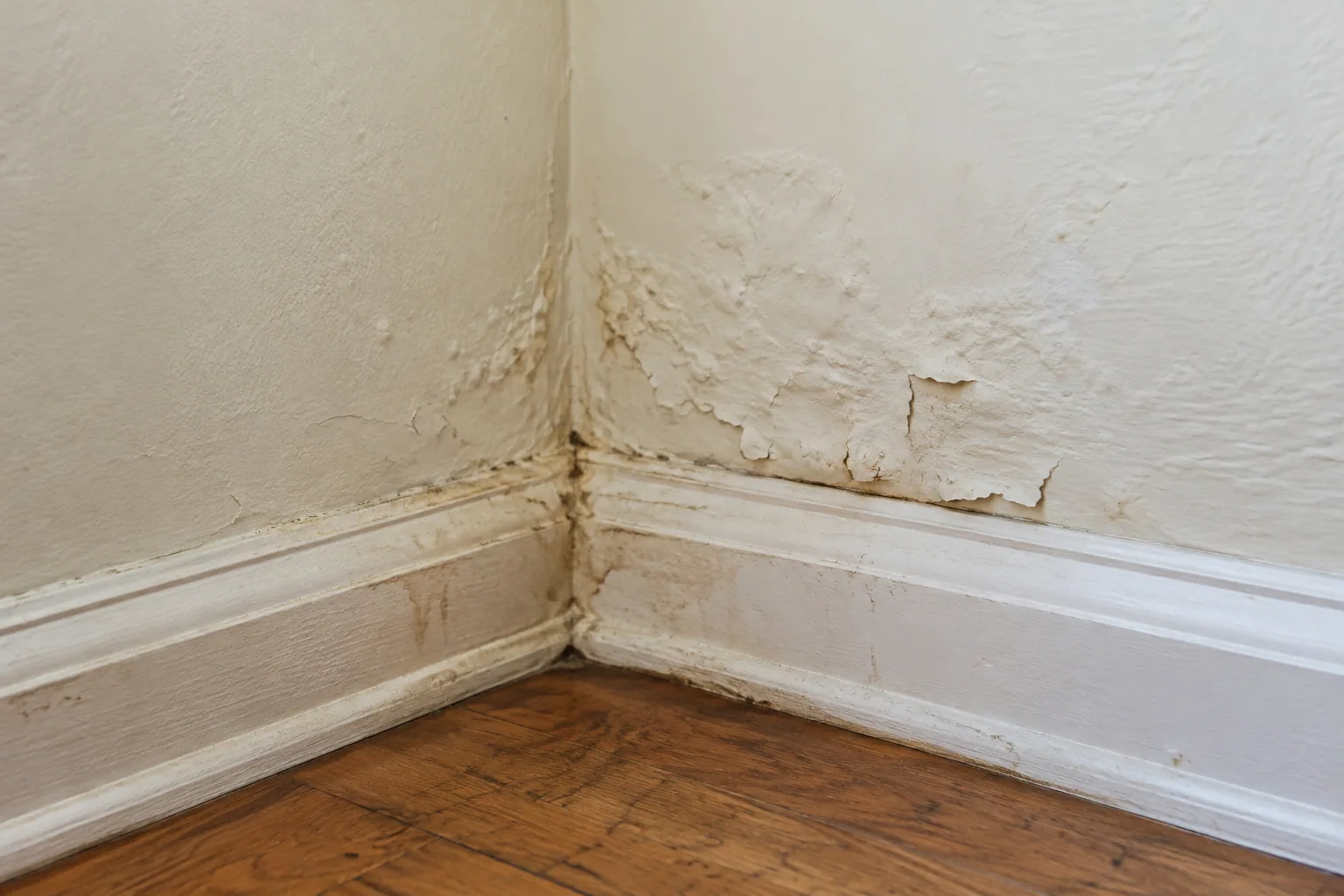
A stain describes the finish; a bulge or fallen fragment raises a question about support. Keep the space below questionable ceiling plaster clear and arrange qualified inspection. Do not push upward, drill a drainage hole or scrape the surface to test its attachment. The portion that has loosened may extend beyond the mark you can see from the floor.
Tell the inspector whether the surface changed suddenly, whether it is still dripping and whether anyone observed cracking before the leak. Photographs taken from a safe position can establish the sequence. Separate an old dry stain from a new event when you have reliable records, but do not rely on color to date the damage. Repeated exposure may overlap the outline of an earlier mark.
Understand the layers worth inspecting
Traditional plaster often forms a layered finish supported by lath or masonry. The National Park Service describes the importance of assessing both plaster and its support when planning repairs. The face can remain recognizable while the attachment behind it deteriorates. Ask the specialist to explain the construction present in your room and which parts can be evaluated without unnecessary loss of original material.
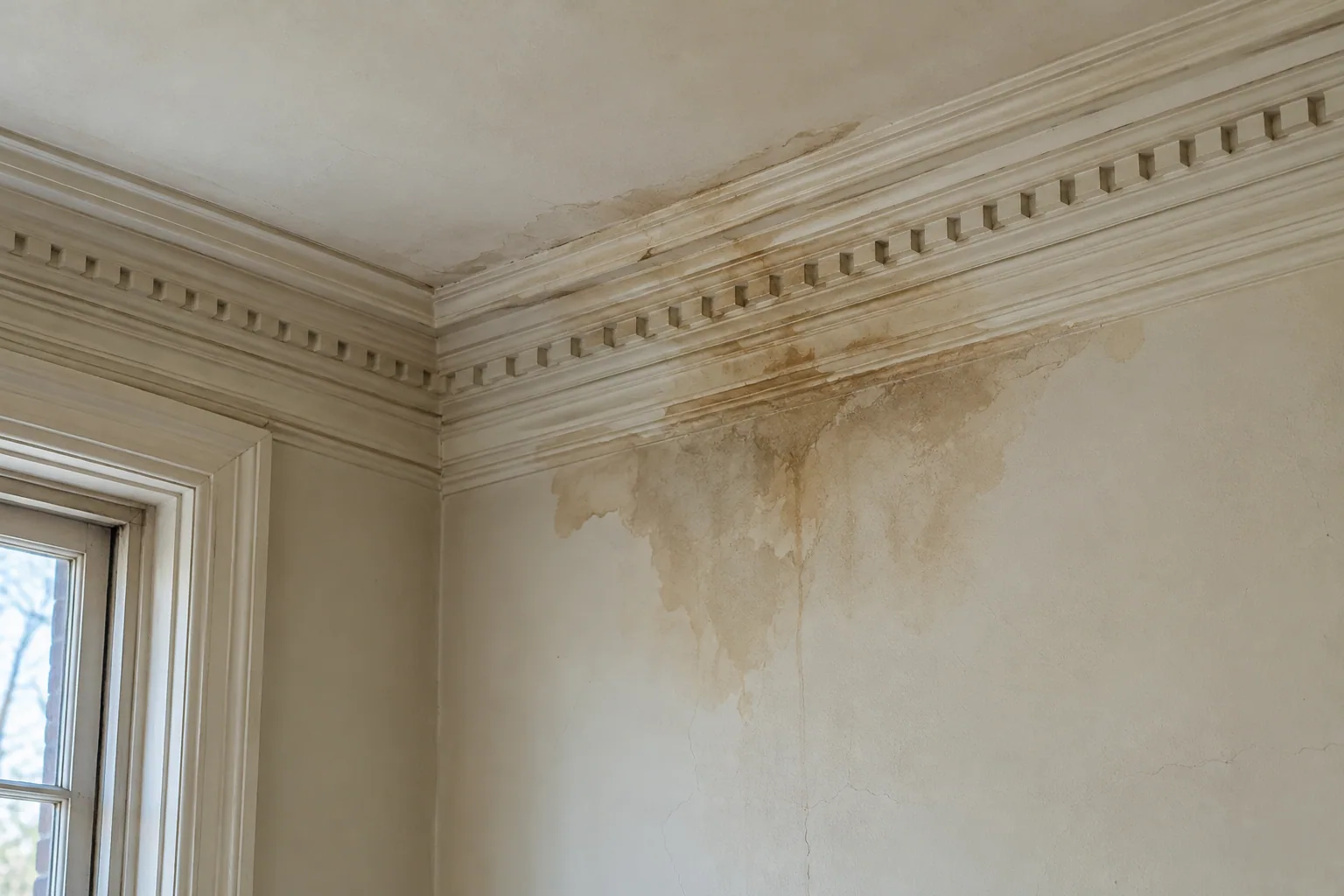
Older houses also contain alterations. A ceiling may combine original plaster, later board patches, decorative moldings and several paint layers. Give the contractor any renovation photographs or records you have. A repair chosen for a recent drywall patch may not suit the adjoining historic finish. The inspection should distinguish those areas rather than treating the room as one uniform sheet material.
Follow the source beyond the visible patch
Water can arrive from plumbing, a roof opening or a leak elsewhere along framing. Ask for a source investigation that fits the room's position. A ceiling below a bathroom, a wall beside a chimney and plaster beneath a dormer call for different access and trades. The plaster repair should not become the first completed task while the cause remains an assumption.
Keep the source-repair record with the finish assessment. If the apparent cause is intermittent, discuss how the responsible trade will evaluate it under relevant conditions. Do not test a roof or plumbing system by deliberately adding water yourself. An uncontrolled test can enlarge damage or put water near wiring, while still failing to reproduce the actual entry path.
Ask for a retention assessment before broad removal
Original plaster helps define the depth of window reveals, the shape of corners and the relationship between walls and trim. NPS guidance supports repair where the condition allows it. Ask the specialist to identify sound areas, areas needing stabilization and areas too deteriorated or contaminated to keep. A marked photograph can make those boundaries easier to discuss than a single allowance for ceiling replacement.
Retention is not a requirement to preserve every fragment regardless of condition. The plan must allow safe access, necessary cleanup and sound support. If removal is proposed, request the reason for its extent and the method for protecting adjacent cornices or trim. The useful comparison is between workable repair approaches, with their limitations stated, rather than between saving everything and demolishing everything.
| Observed condition | Question for the specialist | Possible scope to discuss |
|---|---|---|
| Stain on apparently intact plaster | Are the support and concealed space sound and dry? | Surface repair after the underlying work |
| Localized loss of attachment | Can the affected area be stabilized safely? | Specialist stabilization and compatible patching |
| Crumbling or missing material | Where does sound material begin? | Selective replacement with a defined boundary |
| Decorative plaster near damage | How will the profile and adjacent finish be protected? | Conservation or ornamental plaster expertise |
Plan for old coatings before disturbing them
Painted finishes in an older home may require lead-safe work practices. Unknown building materials may also need assessment for asbestos before cutting or demolition. Ask the contractor how those questions will be resolved and who is qualified to perform the work. Do not collect a sample by scraping an old ceiling yourself merely to accelerate the estimate.
The work plan should address containment, dust, debris routes and protection for the remaining rooms. This matters in occupied homes and in converted buildings where a shared stairway serves neighboring units. Ask where furniture will go, how doorways will be managed and how cleanup will be checked. An attractive final patch does not compensate for avoidable dust spread during the repair.
Dry the assembly before hiding its condition
A new coat of primer can obscure a stain without resolving moisture behind the plaster. Ask the drying team how it will evaluate the support, backing and nearby framing. Measurements should be interpreted for the material involved, especially where metal lath or mixed layers complicate a surface reading. Request a written explanation of any concealed area that remains inaccessible.
Coordinate the drying contractor and plaster specialist before final finishing. Their responsibilities overlap at the handoff: one needs to show the relevant moisture condition, while the other needs a stable base suitable for repair. If additional inspection is required, it is easier to arrange before the patch is complete. Do not let a painting deadline decide whether the assembly is ready.
Define the finish you expect to see
Discuss texture, plane, cornice profiles and painting boundaries. A flat new patch may stand out beside a gently irregular original wall, even when the color matches. Ask for a sample where the finish is distinctive. The estimate should explain whether it includes the plaster repair alone or also preparation and painting of the surrounding ceiling or wall.
Photograph the completed repair and save the product and contractor information. Where the original leak was seasonal, arrange an appropriate follow-up after the source has faced relevant weather or use. If a mark returns, report it before repainting again. A recurring stain is new evidence for the source investigation, not simply a reason to specify a stronger stain-blocking coating.
Your field checklist
- Keep clear of sagging, loose or actively leaking ceiling sections.
- Record source findings separately from the plaster assessment.
- Ask a qualified specialist to map sound and damaged plaster.
- Resolve lead and asbestos questions before disturbance.
- Verify concealed moisture conditions before closing or painting.
- Agree on texture, trim protection and finish boundaries.
A few common questions
Does every stained plaster ceiling need replacement?
No. Staining alone does not establish the condition of the plaster or support. A site inspection should determine whether repair is feasible after source control and drying. Loose, unstable or contaminated material requires a different assessment from a sound stained surface.
Can drywall replace a damaged plaster patch?
A contractor may propose it in some circumstances, but thickness, attachment, surrounding finish and the character of the room need consideration. Ask how the patch will meet adjoining surfaces and whether a compatible plaster repair offers a better result.
Should I test the ceiling by tapping it?
Avoid touching or disturbing a ceiling that may be loose. Describe what you can see from a safe location and let a qualified professional determine an appropriate inspection method, particularly when the surface is wet or sagging.
Sources & further reading
- Repairing Historic Flat Plaster—Walls and CeilingsNational Park Service
- Should I Replace My Plaster Ceiling?National Park Service
- Lead Renovation, Repair and Painting ProgramU.S. Environmental Protection Agency
This guide supports informed conversations about your home. Conditions, materials and local requirements vary; an on-site assessment is necessary for decisions about a particular property.