The useful starting point
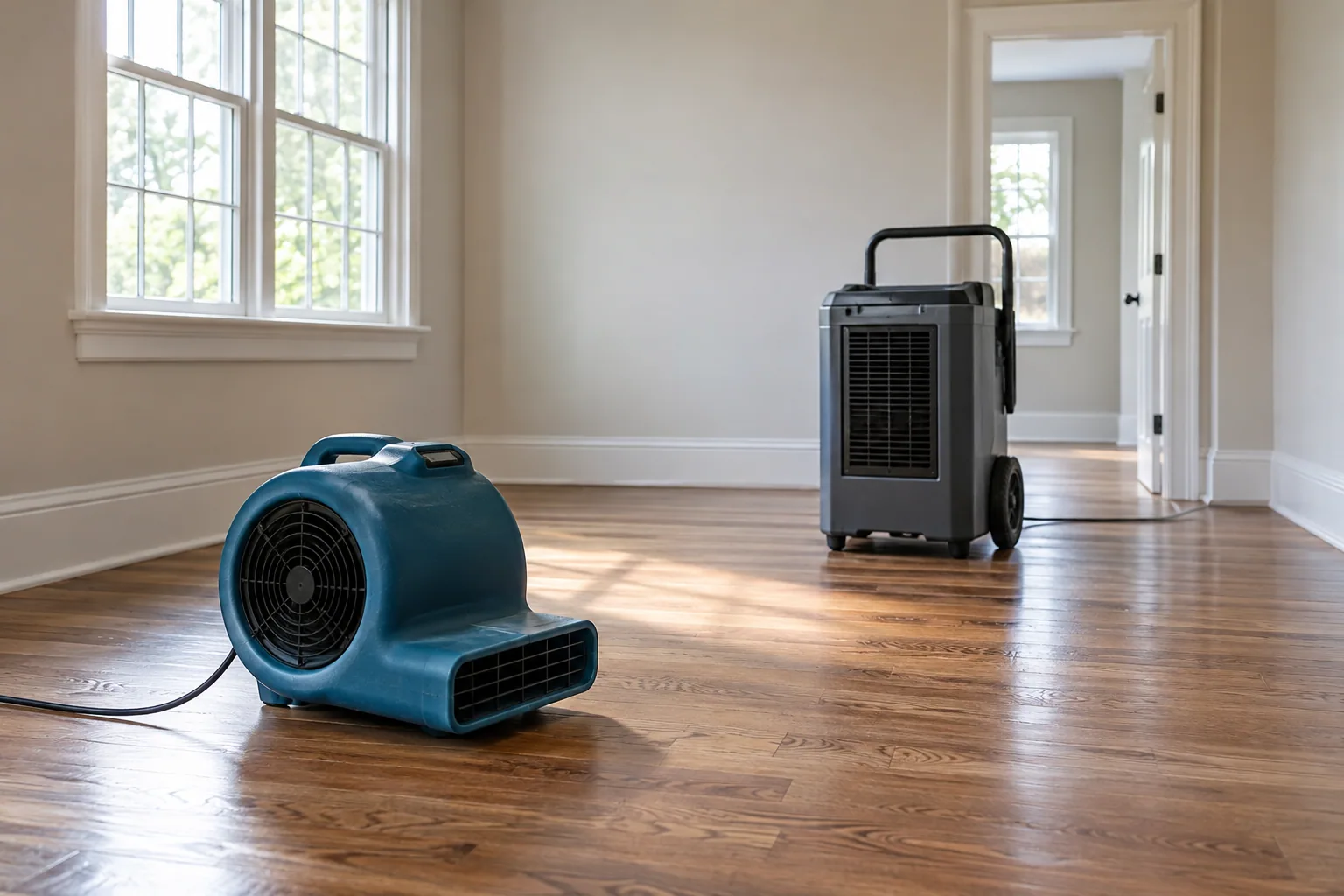
Assess the whole floor assembly before deciding whether hardwood can stay. A flooring specialist should distinguish cosmetic damage from failed boards or attachment, review moisture conditions above and below the flooring, and explain whether drying, localized replacement or broader replacement is appropriate. Sanding should follow that assessment, not substitute for it.
Identify the floor before choosing the repair
Start with the floor you actually have. An old oak strip floor, engineered wood and a floating laminate can look similar in photographs, yet offer different repair options. Find invoices, spare boards or a product label if available. Tell the inspector about earlier refinishing and whether the floor continues beneath cabinets or into adjoining rooms; those details shape the repair boundary.
Ask the flooring professional to identify the construction and attachment method. In an older Boston home, there may be more than one flooring layer below the visible boards. A recent renovation can also conceal older materials. The inspection should establish what the team is proposing to preserve or remove, rather than treating every wood-colored surface as solid hardwood with unlimited sanding allowance.
Describe the shape and the change over time
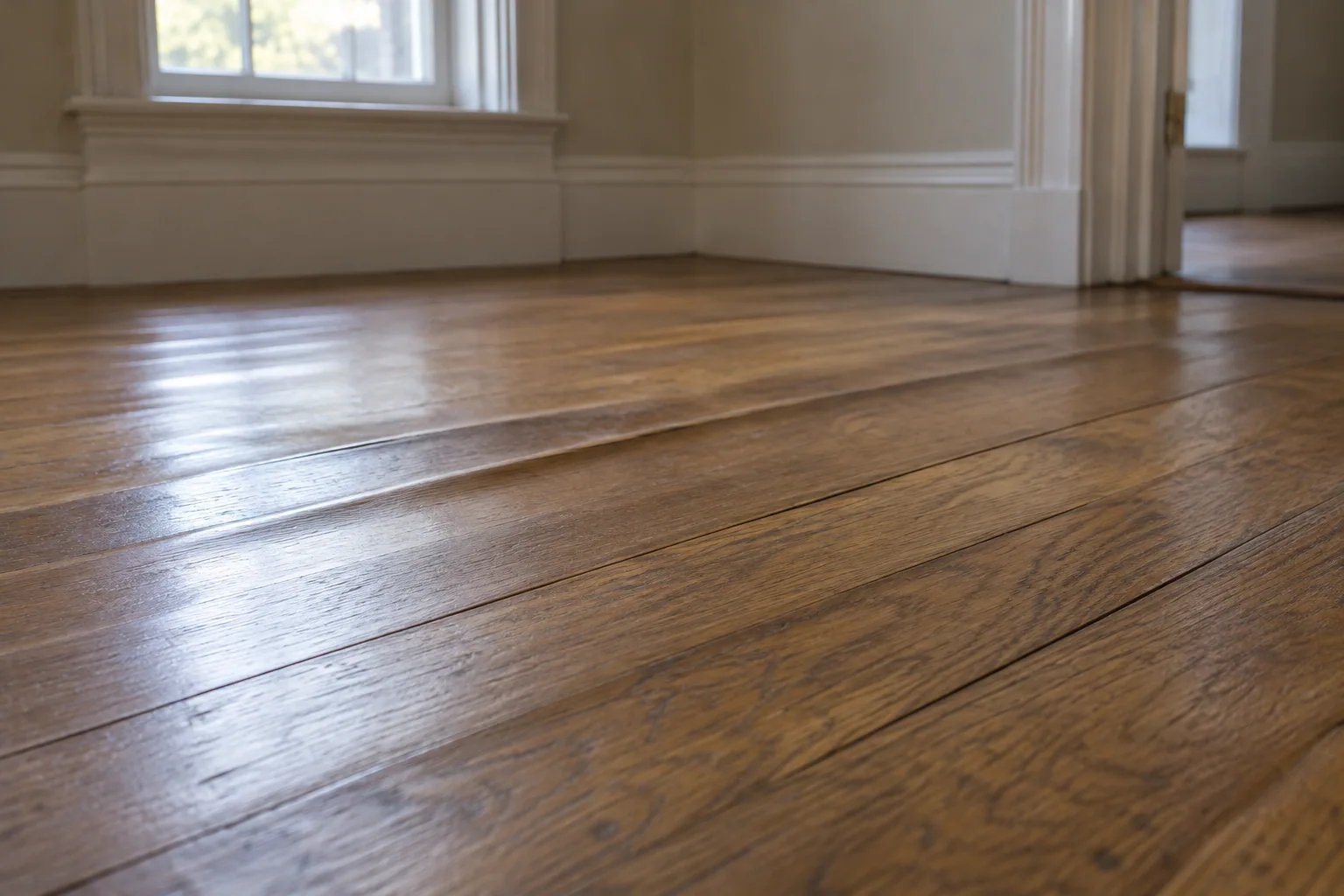
Cupping means the board edges sit higher than the center; crowning describes the reverse shape. Buckling involves a more pronounced loss of the floor's normal position. These terms help describe the surface, but they do not identify the entire cause. Photograph the same area from the same angle as the inspection proceeds, and record whether a raised area is increasing or a doorway has become difficult to use.
Keep traffic off unstable or sharply raised boards. Do not weigh a lifted section down or try to force it flat. Tell the contractor about movement, looseness, new noises and any water in the space below. The useful comparison is between dated observations and measured conditions, not between your floor and a dramatic image of another house with a different product and exposure.
The subfloor deserves its own inspection
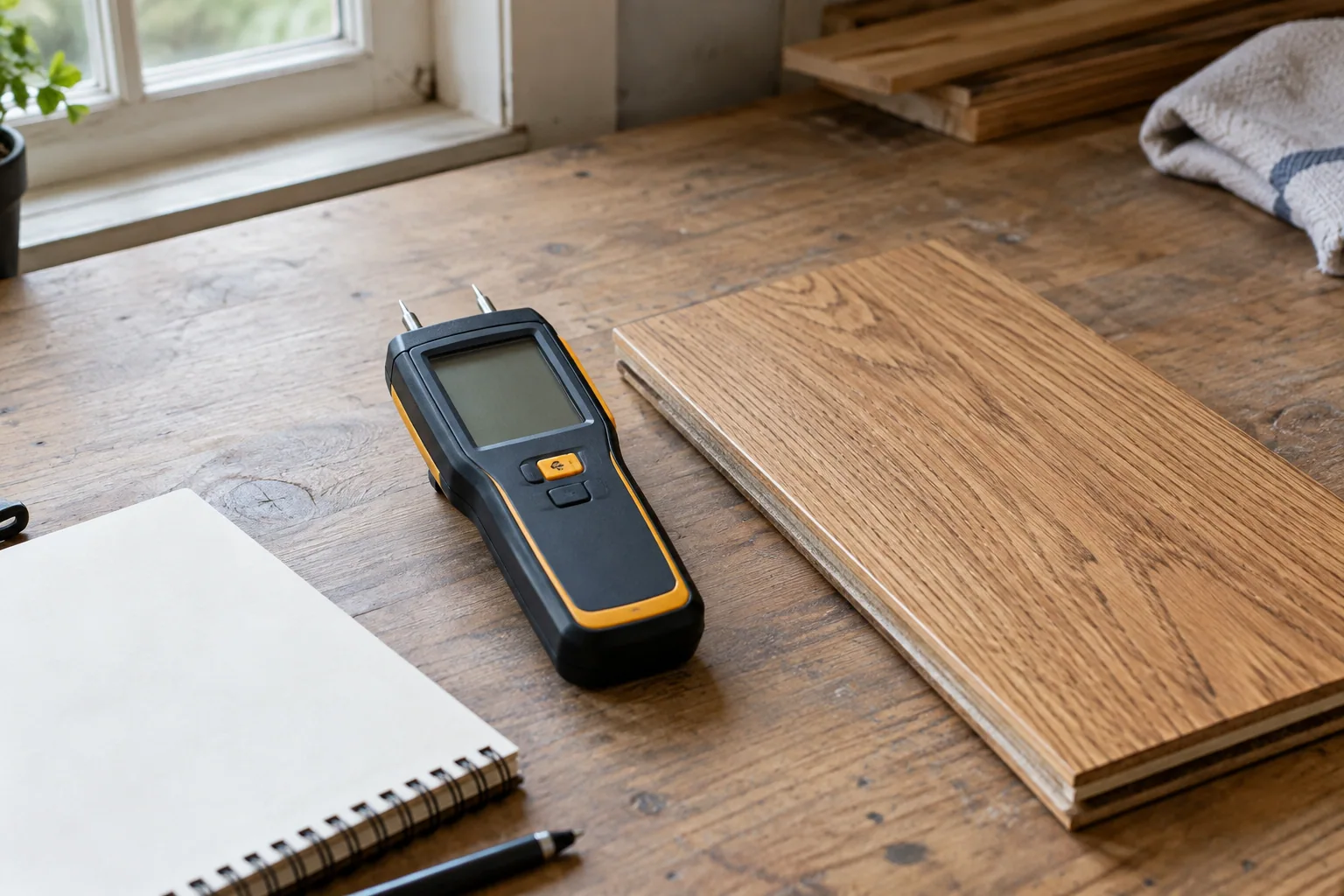
A dry-looking finish can conceal moisture below the boards. Ask how the team will inspect the subfloor and any intervening layers, including the area beneath cabinets or a threshold. Access from a basement may help in some houses; a condo ceiling may make the same investigation more complicated. The contractor should explain what has been measured and which parts remain inaccessible.
Do not compare a reading on finished oak directly with one on plywood or masonry without understanding the instrument and setting. Ask for labeled test locations and an appropriate comparison area. The record should show what the numbers represent and how they relate to a decision about the floor, rather than presenting one high reading as an automatic instruction to replace an entire level.
Compare the available repair paths
A repair proposal should separate keeping the existing floor, replacing selected boards and replacing a larger area. Each option has conditions. The National Wood Flooring Association advises evaluating water damage individually. Ask what finding supports the recommendation for your floor and whether a second flooring assessment would resolve uncertainty before an irreversible finish or removal decision.
Contamination and failed materials can limit what is reasonable to retain. Even when the wood itself remains sound, a damaged substrate or inaccessible affected layer may require removal. Conversely, the existence of a stain alone does not explain why every board must go. Request a material-by-material account of the problem and a clear description of the work needed beneath any replacement.
| Option | What needs to be established | Question for the estimate |
|---|---|---|
| Retain and monitor after drying | The assembly is suitable to remain and progress can be verified | What changes would trigger another decision? |
| Replace selected boards | Damage is limited and the surrounding floor is suitable | How will species, width and finish be matched? |
| Refinish a defined area | The floor is stable and has sufficient remaining wear surface | Where will the finish boundary fall? |
| Replace a larger floor area | Documented material or assembly conditions justify removal | What substrate work is included? |
Why an early sanding appointment can be premature
Sanding changes the surface permanently. Before scheduling it, ask whether the wood and the underlying assembly have stabilized sufficiently for the intended work. The floor's response during drying can change what the surface looks like. A plan based solely on flattening today's raised edges may overlook the moisture condition that created them or the remaining thickness available for future repair.
Have the flooring contractor explain the acceptance criteria in terms of the actual product and site. Avoid relying on a universal waiting period found online. If one company dries the room and another sands it, give the second company the inspection record and ask what it must independently verify. The handoff should resolve readiness rather than leaving each trade to assume the other checked it.
Matching an old floor involves more than color
Board width, wood species, grade, grain pattern and accumulated wear all influence the appearance of a patch. Ask for a sample and a description of how the contractor will blend the repair. In a connected living and dining room, decide whether a natural doorway or another defined line can form the finish boundary. A small quantity of damaged wood may still lead to a larger finishing area.
Before damaged boards leave the house, discuss whether any sound spare material could help the repair. A piece saved from an earlier renovation still needs inspection for condition and compatibility. Record unavoidable differences in the agreement. A sample and a defined finishing boundary tell you more than a promise that new boards will disappear into an aged floor.
Get the floor ready for normal use again
The final scope should identify source repair, remaining substrate work, flooring work and finish instructions. Ask when furniture and rugs can return under the product's requirements. Keep the record of installed materials and finishes, along with the moisture assessment used for the repair. If a future problem occurs, those details let the next professional distinguish a new event from an unresolved condition.
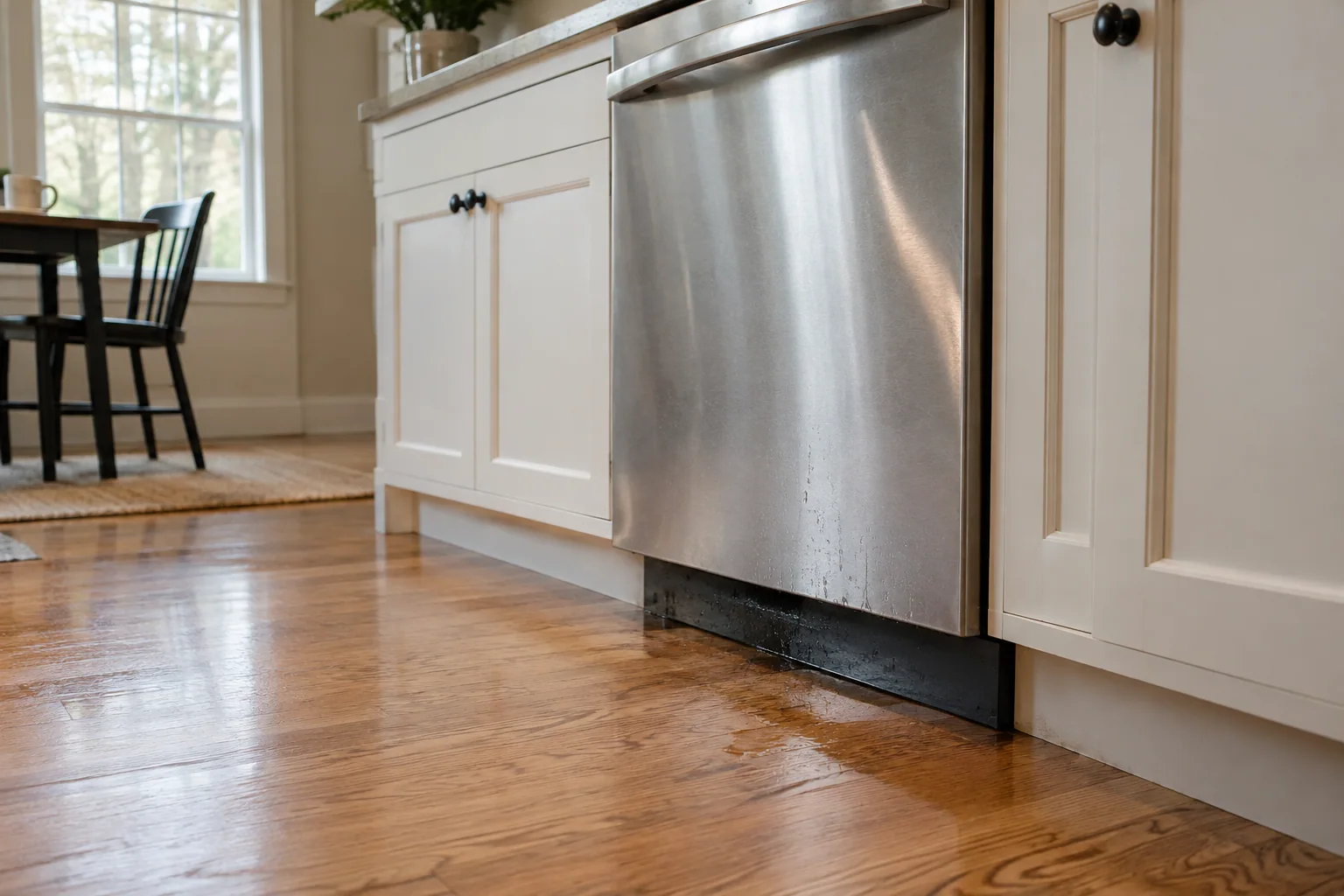
Consider what made the leak hard to detect. A sensor near an appliance, easier access to a shutoff or an inspection of a recurring drain problem may prevent another long exposure. Choose the measure that addresses the actual source. Replacing hardwood without resolving the leak path leaves the most expensive visible part of the job exposed to the same problem.
Your field checklist
- Identify the flooring product, attachment and existing layers.
- Record shape changes and keep clear of unstable boards.
- Request an inspection of the subfloor as well as the finish.
- Compare retention and replacement options using documented findings.
- Confirm readiness and remaining wear surface before sanding.
- Agree on matching, finish boundaries and return-to-use instructions.
A few common questions
Will cupped hardwood flatten by itself?
It may change as moisture conditions stabilize, but recovery is not guaranteed. Ask a flooring specialist to evaluate the wood, attachment and substrate. The current shape alone cannot establish whether waiting, repair or replacement will be appropriate.
Can only the stained boards be replaced?
Sometimes. The contractor needs to assess the surrounding assembly and whether compatible boards are available. The replacement area and the refinishing area may differ, particularly where the floor runs continuously through several rooms.
Is engineered wood always ruined by a leak?
No universal rule fits every product or exposure. Separation of layers, attachment failure and contamination matter. Obtain the manufacturer's requirements and a site-specific evaluation; do not assume engineered flooring can be treated exactly like solid wood.
Sources & further reading
- Wood Flooring Installation GuidelinesNational Wood Flooring Association
- Wet and Dry Moisture Meter ValuesFlir
- Flood Cleanup to Protect Indoor Air and Your HealthU.S. Environmental Protection Agency
This guide supports informed conversations about your home. Conditions, materials and local requirements vary; an on-site assessment is necessary for decisions about a particular property.