The useful starting point
Use timing and distribution to guide an attic inspection, not to make a final diagnosis. Localized wetting after rain suggests checking roof details; widespread cold-weather moisture suggests examining indoor moisture and air paths. Both mechanisms can occur in one attic, so repairs should follow confirmed findings.
First decide whether the attic is safe to enter
An attic may have no continuous floor, exposed services and insulation that obscures footing. Inspect only from safe access where you can stand without disturbing materials. Do not step on the ceiling below or move unknown insulation to reach a stain. If there is a wet electrical component, an unstable surface or a sagging ceiling beneath the area, keep clear and arrange professional assessment.
Photographs from the access opening can still be useful. Include the direction of view and the room below. If you cannot reach the area safely, ask the inspector to document it and explain any access limitations. A report that acknowledges an unexamined roof pocket is more useful than a confident conclusion based on the small portion visible from the hatch.
Compare the event with the weather
Record when the moisture first appeared, then distinguish new wetting from old discoloration. Note rainfall, wind, snow cover, thawing and prolonged cold. Rain-related wetting can point toward roof coverings, flashing or wall intersections. Cold-weather moisture without rain can make condensation part of the investigation. These clues narrow the questions; they do not prove that only one mechanism is present.
Include indoor events that changed moisture or air movement, such as a bathroom renovation, new exhaust fan or recent insulation work. Ask whether exhaust ducts actually terminate outdoors and remain connected. Do not assume a visible duct disappears into a correct termination. Where a finished attic conceals much of the roof, the inspection may need information from occupied rooms as well as the accessible attic.
Look at the distribution rather than the darkest spot
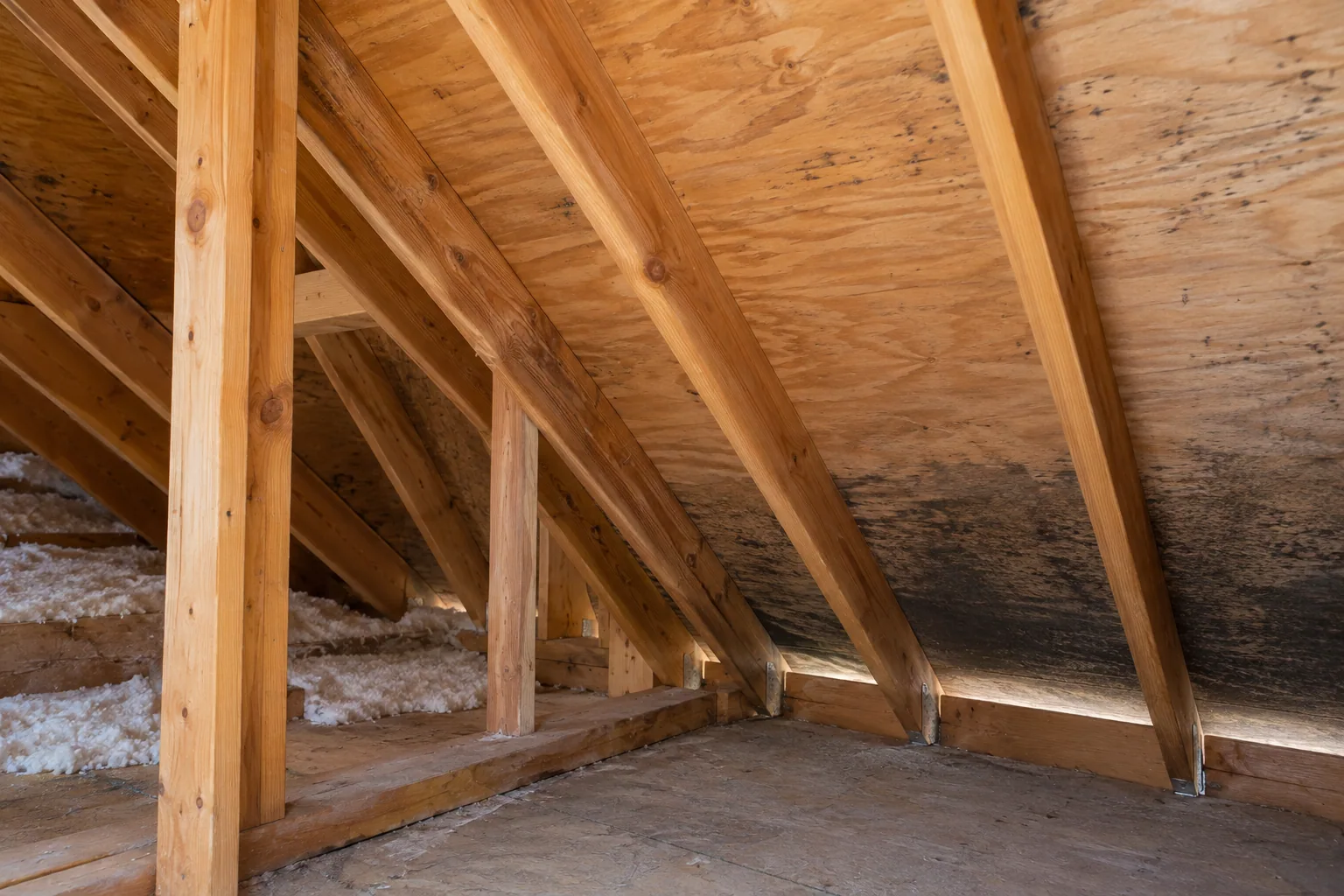
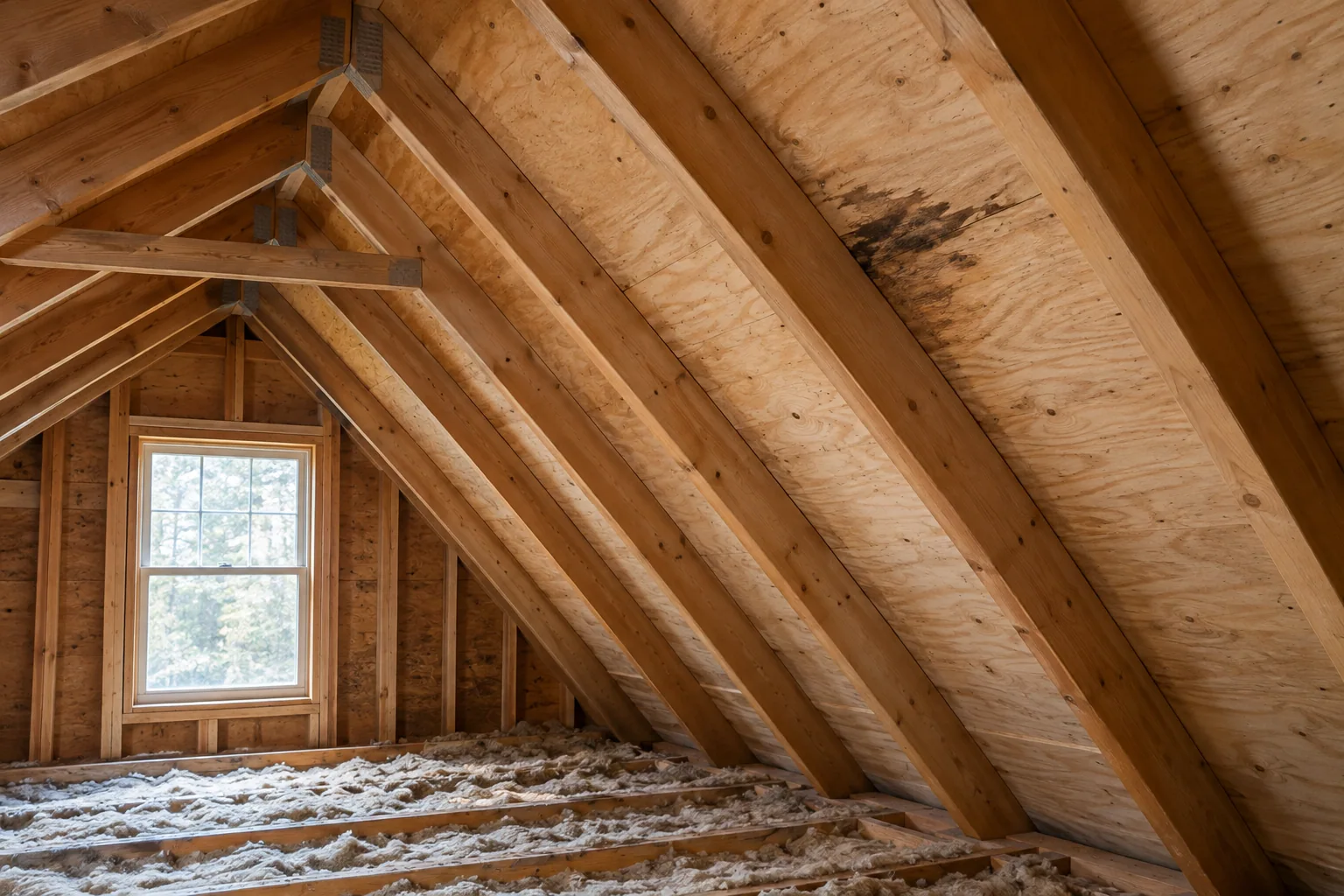
A localized trail beneath a penetration deserves a different examination from moisture spread over many sheathing panels. The inspector should compare affected and apparently unaffected areas, including roof orientations and connections. A dark stain may remain after a past event, while a less dramatic area may be actively wet. Appearance needs to be considered alongside current conditions and the building's history.
Measurements need an explanation. Which materials did the inspector compare, and where were the readings taken? A moisture meter alone cannot diagnose the source; metal, material type and limited access can affect its interpretation. Thermal images also need follow-up to confirm suspected moisture. A useful report connects those observations to a possible route and states what remains uncertain, rather than presenting a color image as the answer.
| Observed pattern | Question to investigate | Important limitation |
|---|---|---|
| Local trail below a chimney | Is a roof or masonry detail admitting water? | The visible point may be below the entry |
| Broad moisture in cold weather | Is indoor air reaching cold sheathing? | A roof leak may also exist |
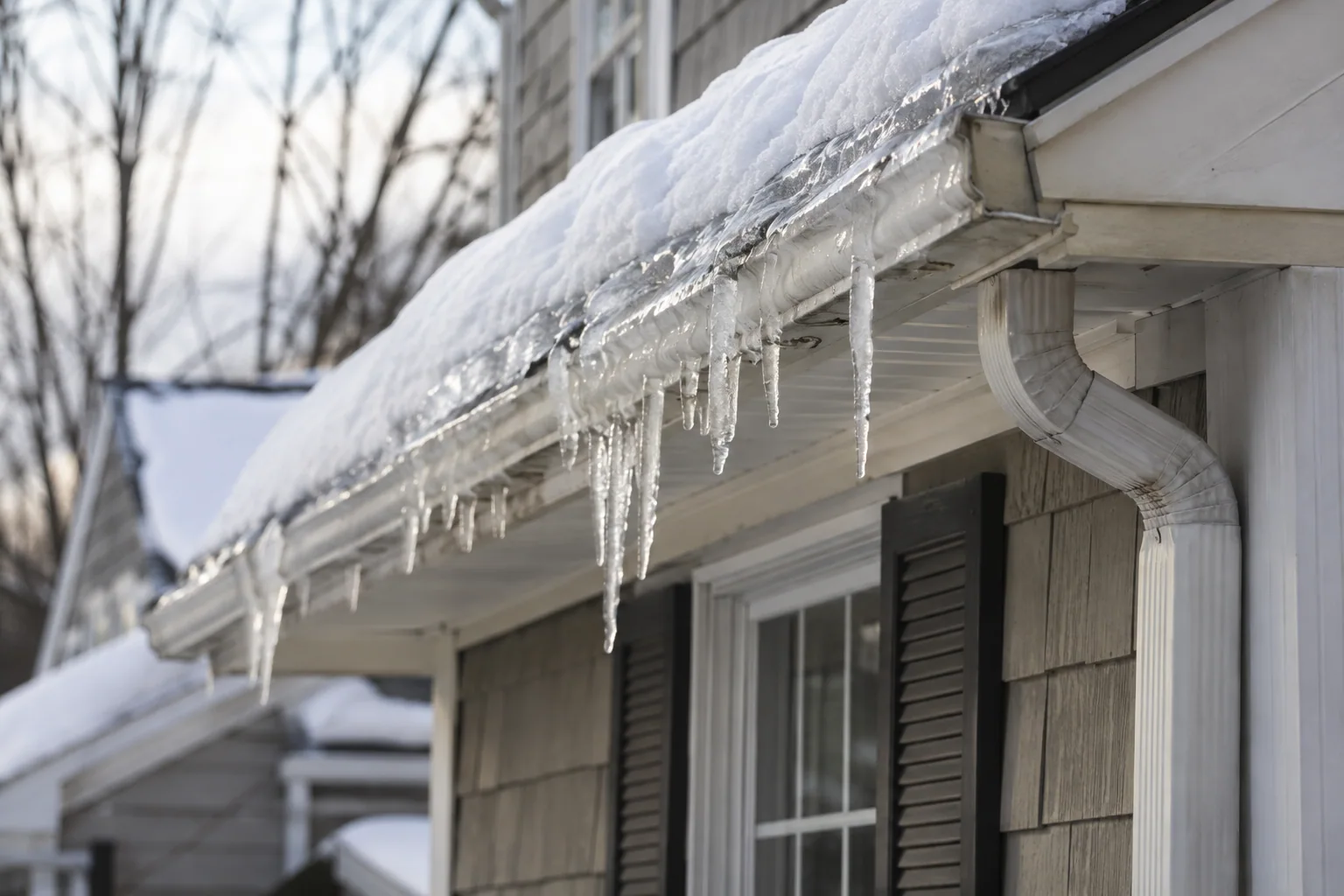
| Wetness during snowmelt | Is ice obstructing drainage? | Snowmelt timing alone is not proof |
| Old dark patch with no current wetting | Is it historic staining or recurring damage? | Color does not show present moisture |
Ask the roofer and energy assessor different questions
For the roof, ask about coverings, penetrations, flashing and water paths. Request photographs of suspect details and a reason for each proposed repair. A roof replacement recommendation should explain the condition that makes replacement necessary, not simply point to an interior stain. Where a wall or chimney meets the roof, the work may involve more than the roofing material itself.
For the attic enclosure, ask about air leakage, insulation continuity, exhaust ducts and the intended ventilation arrangement. Adding vents cannot be assumed to correct every moisture problem. The assessor should explain the actual assembly and the proposed changes. In a Cape or finished attic, knee walls and enclosed slopes can complicate access, so the plan should identify how those areas will be evaluated rather than treating the attic as one open space.
Address wet materials without losing the source evidence
An active leak needs prompt attention while the investigation continues. Photograph conditions before materials are removed when safe, and ask the contractor to record concealed findings. Wet insulation, deteriorated wood and affected finishes require their own assessment. A repair that stops exterior water does not automatically establish that the assembly is ready to close or that every affected material can remain.
If discoloration may be mold, avoid brushing, spraying or blowing air across it as an experiment. The extent, moisture source and safe cleanup approach need consideration. The EPA's household guidance links mold control to moisture control and cautions that hidden areas may complicate cleanup. Ask how the contractor will protect occupied rooms and handle access through an attic hatch, especially if materials must be carried through the house.
Verify under conditions that test the explanation
Match follow-up to the suspected mechanism. For a rain leak, ask when the repaired location will be checked after comparable weather or an appropriate professional test. For cold-weather condensation, agree on the observations that will be reviewed during relevant conditions. A dry summer inspection cannot by itself demonstrate that a winter problem has been resolved.
Keep the original photographs, findings and completed-work record together. Note any changes to ventilation, insulation, ducts or roof details, because a later assessor will need to understand the new arrangement. If symptoms return, report their timing and location rather than immediately repeating the same treatment. The follow-up should test the explanation that led to the repair, not merely confirm that the contractor finished the quoted work.
Your field checklist
- Use safe attic access without stepping between framing members.
- Separate old discoloration from current wetting.
- Record weather and relevant indoor changes.
- Compare localized and widespread patterns across the attic.
- Ask roof and enclosure specialists to explain their distinct findings.
- Agree on follow-up conditions before the work is closed.
A few common questions
Does frost on roof nails prove the roof is leaking?
No. Frost can form when moisture reaches cold surfaces, but it does not identify the source of that moisture. The investigation should consider air paths, indoor moisture, roof conditions and the wider distribution of wetting.
Can a new roof leave a condensation problem unchanged?
Yes. Replacing the roof covering may not address indoor air leakage, exhaust problems or the insulation and ventilation arrangement. Ask which identified cause the roofing work will correct.
Should the attic be sprayed before the source is known?
Treatment should follow an assessment of the material, extent and moisture source. A surface treatment does not repair a leak or establish that an assembly is dry. Discuss source control and cleanup as connected parts of the scope.
Sources & further reading
- Preservation Brief 39: Controlling Unwanted Moisture in Historic BuildingsNational Park Service
- A Brief Guide to Mold, Moisture and Your HomeU.S. Environmental Protection Agency
- Attic Knee WallsU.S. Department of Energy, Building America Solution Center
- Preservation Brief 4: Roofing for Historic BuildingsNational Park Service
This guide supports informed conversations about your home. Conditions, materials and local requirements vary; an on-site assessment is necessary for decisions about a particular property.