The useful starting point
An attic mold proposal should address moisture as well as affected surfaces. Ask for the evidence behind the diagnosis, a map of inspected areas, the role of roof leaks and indoor air, and a plan for safe access. Cleaning alone does not establish that the moisture pathway has changed.
Ask for an attic map, not a close-up alone
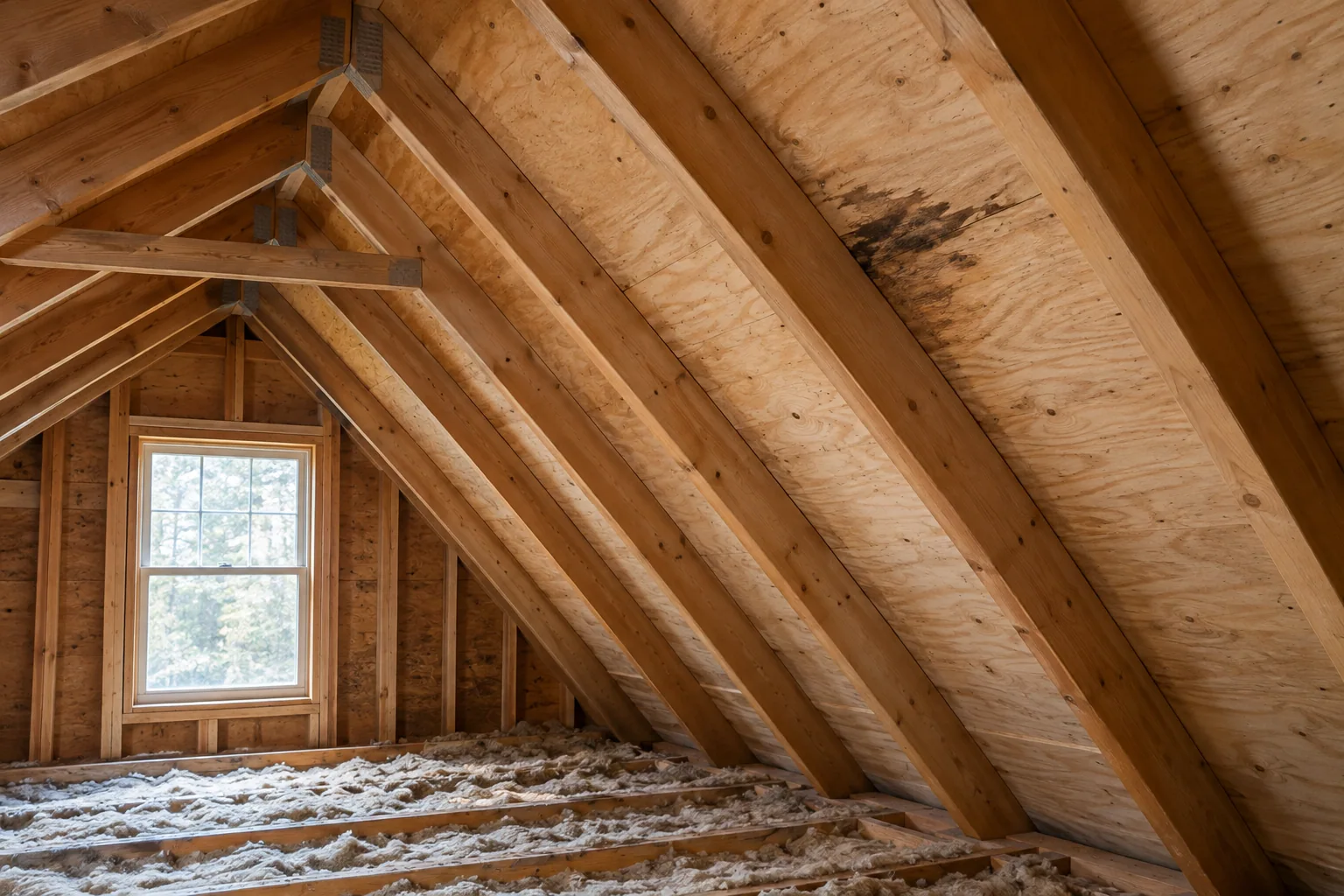
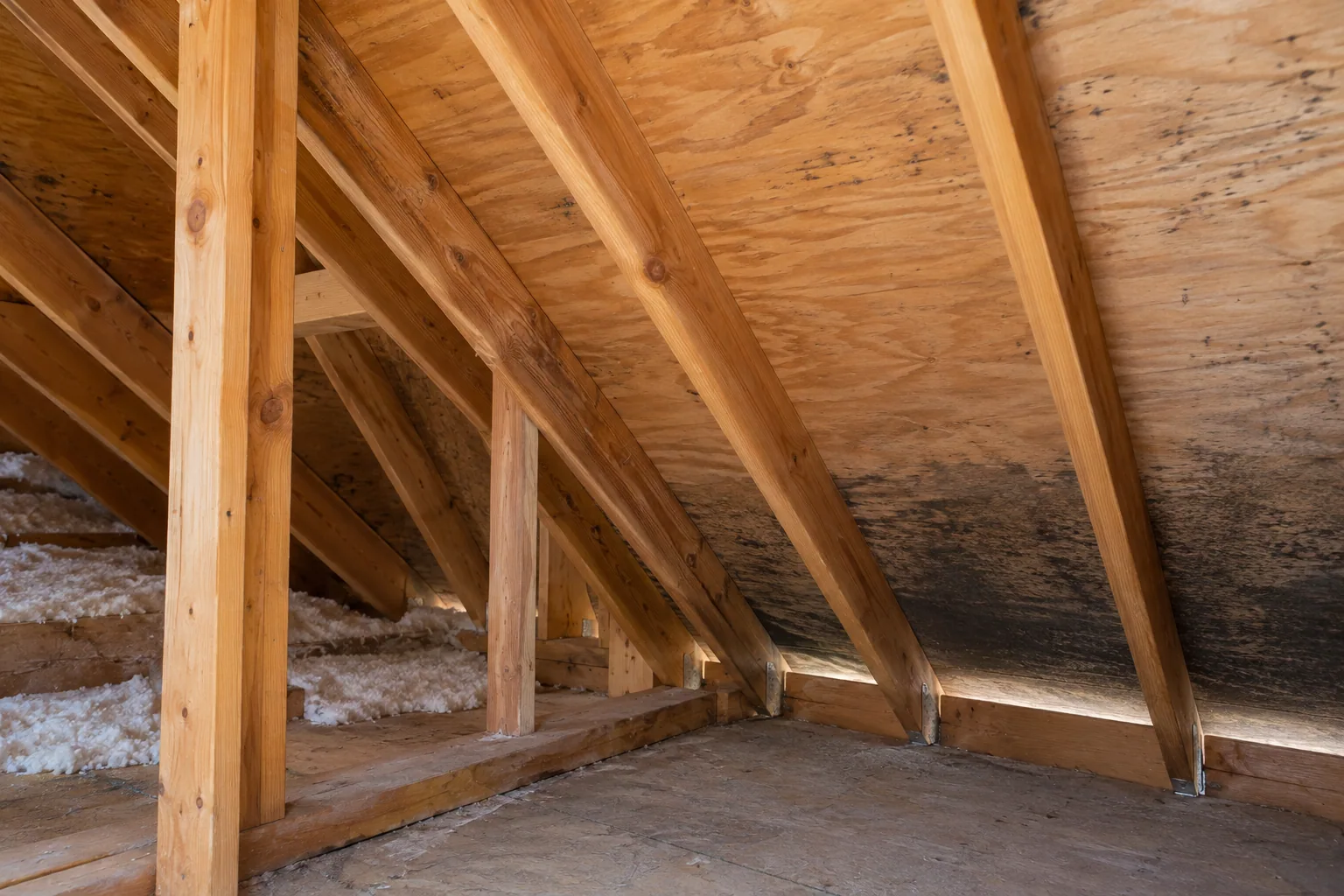
A tightly framed photograph of dark sheathing tells you little about its location. Request wide photographs showing the roof slope, eaves, ridge, penetrations and the route used for access. Then ask for detail views tied to those locations so that another contractor can understand the finding.
The pattern helps frame questions. Is the discoloration near one roof penetration, spread along a cold roof slope, or concentrated beside a bathroom exhaust connection? These are clues for the inspector to evaluate, not diagnoses a homeowner should make from a gallery of pictures.
Record which portions of the attic could not be reached. Low eaves, knee-wall spaces and additions can create separate areas. A clean view from the hatch does not establish the condition of roof framing that nobody inspected.
Keep access separate from curiosity
Do not enter an attic simply to confirm an estimate. Fragile ceiling finishes, concealed wiring, low headroom and uncertain walking surfaces make access a task in its own right. Ask the contractor to explain how observations were obtained and what protected the occupied rooms below.
Older insulation deserves caution before disturbance. EPA advises leaving suspected asbestos-containing material undisturbed until it can be assessed appropriately. If the attic contains an unfamiliar loose-fill material or other suspect components, the investigation plan should account for that before anyone starts moving insulation.
An attic visit can disrupt the room below. Find out whether the hatch area needs isolation, stored belongings need moving or occupants need to avoid the space. In a Cape, the access may open into a bedroom or knee-wall closet; in a top-floor condo, it may be part of the only usable living room.
Trace roof water and indoor moisture separately
The roofer's question is where outside water could enter. The building-performance question is how indoor air and moisture reach cold surfaces. A useful assessment allows both explanations to be considered and states the evidence for each, rather than forcing every dark patch into one category.
Provide the dates of roof work, ice-dam leaks, plumbing work and insulation changes. If a bathroom was remodeled before the problem was noticed, ask whether its exhaust route was checked. A new fan grille in the room below does not show where the duct ends.
The Department of Energy's ventilation guide directs kitchen and bathroom exhaust outdoors rather than into attics. Request photographs of relevant connections and the outdoor termination. Have a qualified person check inaccessible routes instead of assuming that a duct disappearing into insulation reaches outside.
| Possible route | Evidence to request | Relevant specialist |
|---|---|---|
| Roof penetration or flashing | Location photographs and leak assessment | Roofer or building-envelope contractor |
| Bathroom exhaust | Duct route, connections and outdoor termination | Qualified ventilation contractor |
| Air leakage from living space | Assessment of penetrations and attic access | Building-performance professional |
| Affected sheathing or framing | Condition, extent and proposed treatment | Experienced remediation contractor |
Treat insulation and ventilation as a design
Adding insulation, adding vents and sealing openings are not interchangeable tasks. Ask the person designing the repair to explain the attic's intended arrangement and how the proposed change fits it. A vented attic and a roof assembly designed to be unvented require different reasoning.
Ask whether existing soffit paths will remain clear, how the hatch will be treated and which penetrations require appropriate fire-safe details. Work around chimneys, recessed lights and electrical systems belongs in a coordinated scope, not an improvised homeowner sealing exercise.
The important deliverable is a drawing or written description that another contractor can follow. If the cleaning company and insulation company are different businesses, decide who confirms that the moisture-control work is complete before the cleaned space is concealed again.
Read the cleanup scope closely
Ask the remediator to name the surfaces included, the areas excluded and the proposed method for each material. A phrase such as attic treatment does not tell you whether the plan includes cleanup, removal, coating, insulation handling or repair of damaged wood.
EPA's cleanup guidance emphasizes correcting the water problem and removing growth rather than simply painting over it. Request an explanation of any coating's purpose, the surface preparation required and how the contractor will document the condition before the coating changes its appearance.
Structural condition is a separate question from surface discoloration. If someone recommends replacing sheathing or framing, ask what finding supports that decision and who is qualified to assess it. Conversely, a promise that everything can be cleaned should not substitute for checking damaged material.
Coordinate the order of work
A project may involve roof repair, exhaust correction, remediation, insulation work and interior ceiling repair. Ask for those tasks in order, with a named person responsible for each handoff. A delay between trades can leave an opening exposed or hide an area before it has been checked.
Discuss where equipment and removed materials will pass through the house. In a triple-decker or condo building, shared stairs and hallways may need arrangements with other occupants. Confirm working hours and access before the crew arrives with equipment.
Keep the estimate's assumptions visible. If inaccessible spaces, concealed damaged wood or suspect insulation require additional work, establish how findings will be photographed and how changes will be authorized. A transparent allowance is easier to evaluate than a surprise after the attic is opened.
Follow up under conditions that matter
After work, collect the inspection photographs, repair records and any measurements used to judge the result. Ask which observations support completion and which conditions need a later check. Warm dry weather may not reveal the same problem that appeared during a cold winter.
Schedule follow-up around the original pattern when practical, and ask how to report recurrence without entering the attic. A photograph from an approved accessible location or a new ceiling stain may be enough to trigger a professional return visit.
Keep the ventilation and roof documents together with the cleanup record. If the house changes hands, that file explains what was found and repaired far better than an invoice that only says mold treatment.
Your field checklist
- Request wide and close photographs labeled by attic location.
- Record inaccessible areas and safe-access limitations.
- Have roof leaks and indoor moisture routes considered separately.
- Verify bathroom exhaust reaches an appropriate outdoor termination.
- Coordinate remediation, roof, ventilation and insulation work.
- Save the condition record before any coating or concealment.
A few common questions
Does dark attic wood always mean the roof must be replaced?
No. Appearance alone does not establish structural condition or the appropriate repair. Ask for an assessment of the material, the moisture history and the basis for replacement. Roof covering, sheathing and framing are separate parts of the decision.
Will adding more roof vents solve the problem?
Not necessarily. The correct approach depends on the assembly and the moisture route. Have a qualified professional explain how any ventilation change works with exhaust ducts, air sealing, insulation and existing roof details.
Sources & further reading
- Guide to Home VentilationU.S. Department of Energy
- Mold Cleanup in Your HomeU.S. Environmental Protection Agency
- Protect Your Family from Exposures to AsbestosU.S. Environmental Protection Agency
This guide supports informed conversations about your home. Conditions, materials and local requirements vary; an on-site assessment is necessary for decisions about a particular property.