The useful starting point
Compare the water's first appearance with rainfall and plumbing use, then inspect accessible routes without entering unsafe areas. A meter can help identify some supply-side leaks but cannot rule out drain leaks, seepage or condensation. Match the first professional call to the evidence, and allow for more than one source.
Before tracing the water, check the hazards
Stay out of standing water near electrical equipment, outlets or wiring. Do not wade to a panel or operate an appliance from a wet location. The CDC's electrical-hazard guidance is explicit about avoiding switches and electrical devices while standing in water. If water is rising, its source is unknown or a structure appears unstable, arrange prompt professional help rather than extending a home inspection.
Treat sewage odor, waste or a suspected drain backup as reasons to keep people and pets away and call qualified help. Clear-looking water is not proof of cleanliness. Do not use ordinary fans to spread air from a potentially contaminated area through the house. Once safety is established, photographs and a location record can help the investigator without requiring you to touch the water or disturb materials.
Identify where water appeared first
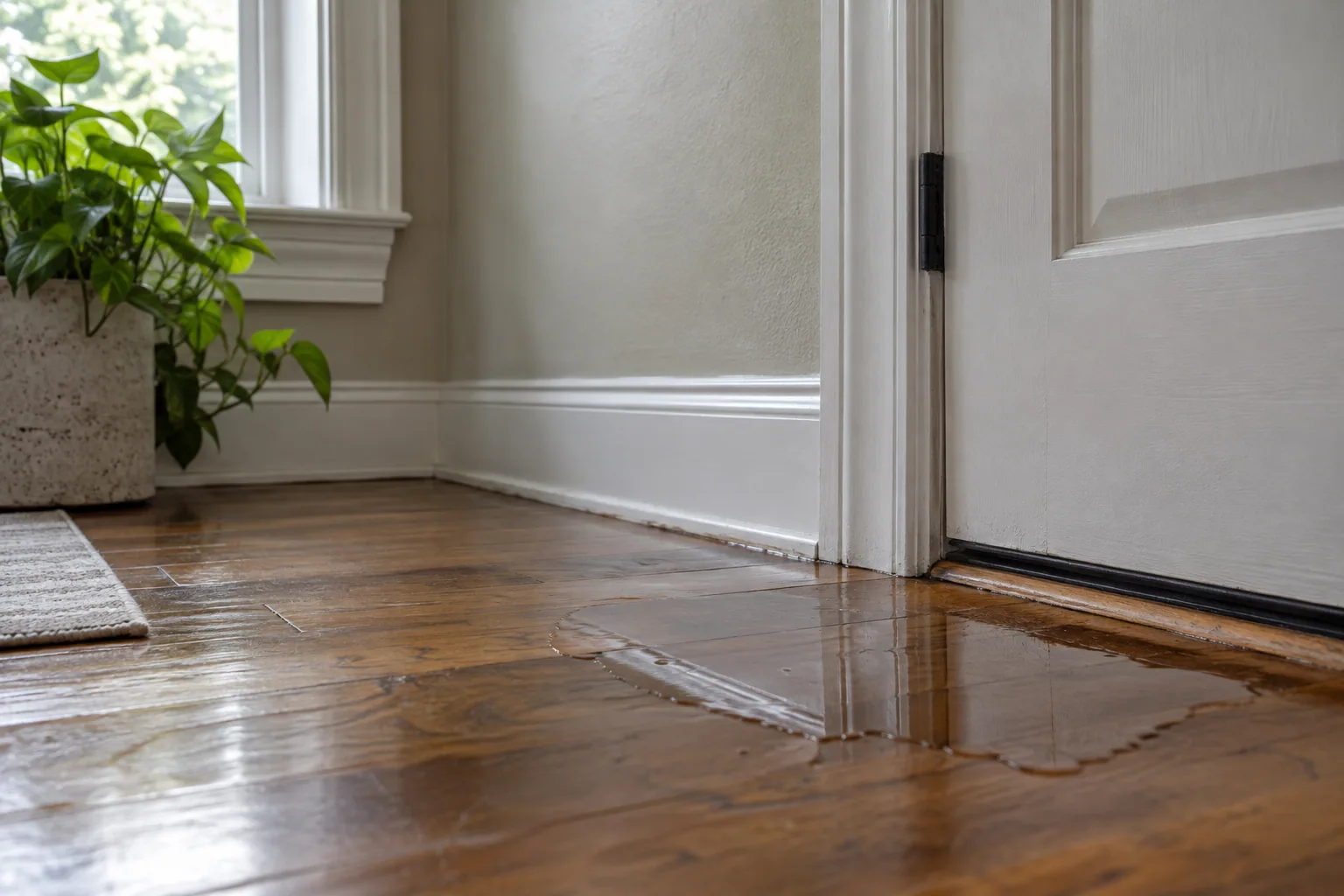
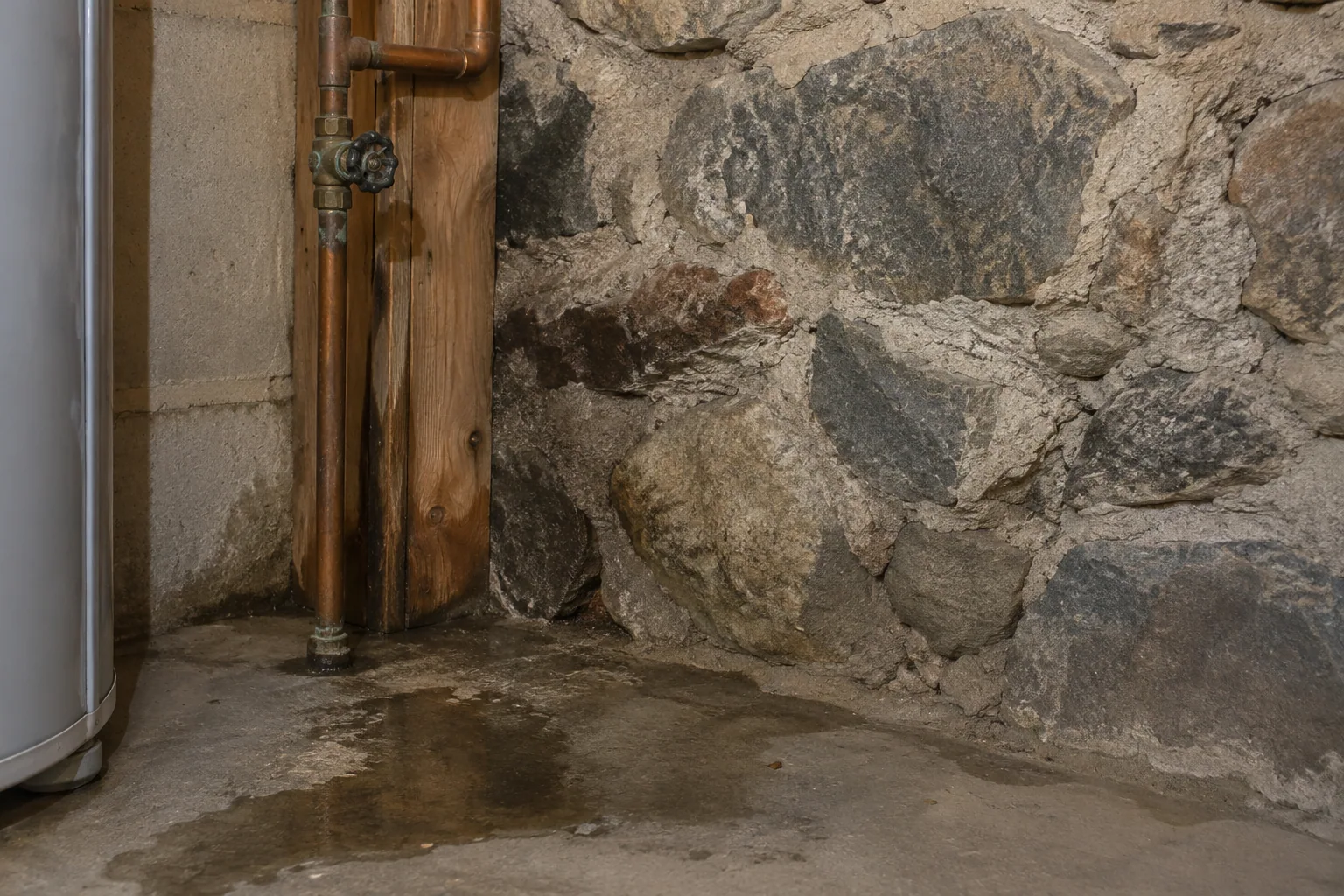
A floor slopes toward low points, so the largest puddle may be some distance from its source. Look from a dry, safe location for trails, drips and the highest visible wet point. Record whether water first showed at a wall joint, pipe, appliance, floor drain or stairwell. If you discovered the area already wet, state that limitation instead of reconstructing an event you did not see.
Take an overview showing the surrounding equipment and walls, followed by close-ups of accessible clues. Note the time and whether the water is continuing to arrive. A diagram can help when several locations are involved. In a shared building, notify the responsible contact early; water use or equipment in another unit may be relevant, and access needs to be coordinated.
Use timing to choose the next question
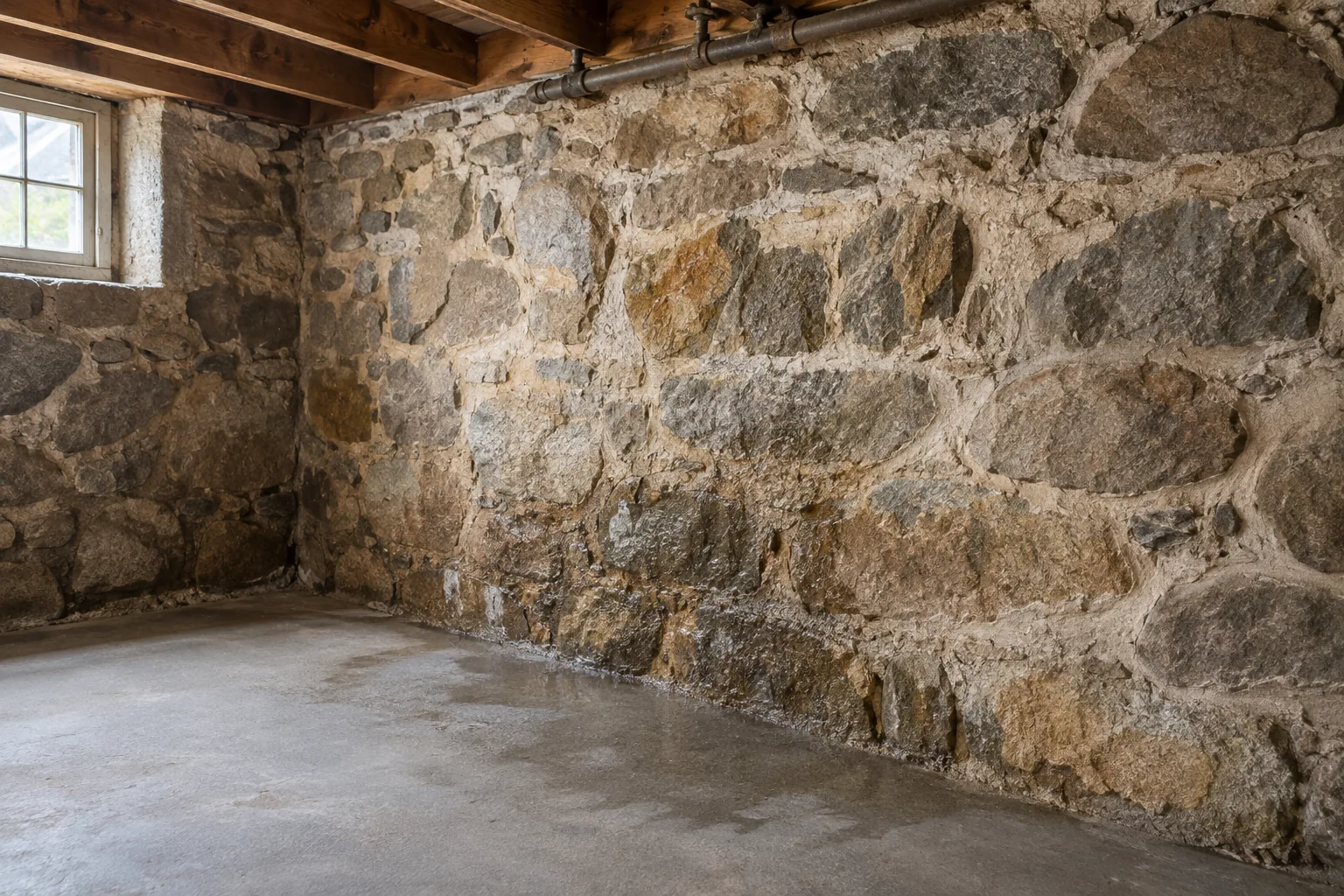
Water that follows rain or snowmelt makes exterior drainage, foundation entry and cellar openings relevant. Water associated with a washing machine, shower or other fixture calls for plumbing investigation. Continuous wetting without household use may raise different supply or equipment questions. These are useful leads rather than rules; stored water can appear later, and several events may overlap.
Keep a short log with weather, visible wetting and relevant appliance activity. Do not repeatedly run a suspected leaking appliance to prove the pattern. Ask the plumber or investigator whether a controlled test is appropriate and who should perform it. A carefully managed test with someone watching the affected area is more informative than adding water without knowing where it may go.
| Clue | Useful first investigation | Limit |
|---|---|---|
| Wetting after rain | Runoff and foundation or opening entry | Plumbing may also be leaking |
| Drip during a fixture cycle | Supply and drain connections | A delayed leak can complicate timing |
| Water with no known use | Supply, equipment and groundwater conditions | No single source follows automatically |
| Moisture on cool pipes | Condensation and nearby leaks | A wet pipe is not proof of a failed joint |
Understand what a water-meter check can show
A meter check is useful only when you know what the meter serves. EPA WaterSense describes comparing readings during a period with no water use to look for leaks. Account for automatic equipment and every other user before interpreting a change. In a multiunit house, another household's normal use may explain the reading; it does not by itself identify a basement leak.
A change can justify further supply-side investigation, but it does not locate the failure. An unchanged reading does not rule out a drain leak, rainwater entry or condensation, and an intermittent leak may not be active during the check. Ask a plumber to interpret the result alongside the physical evidence. Do not shut off shared or unfamiliar valves as an experiment; have the appropriate controls identified and operated safely.
Look at the exterior route and equipment together
If weather is relevant, trace downspouts, cellar stairs, window wells and places where runoff collects near the foundation. Record visible defects from safe ground-level access. A drainage contractor should explain the proposed collection and discharge route, including maintenance and any limitations. An interior system should not be selected merely because the puddle happens to sit beside a wall.
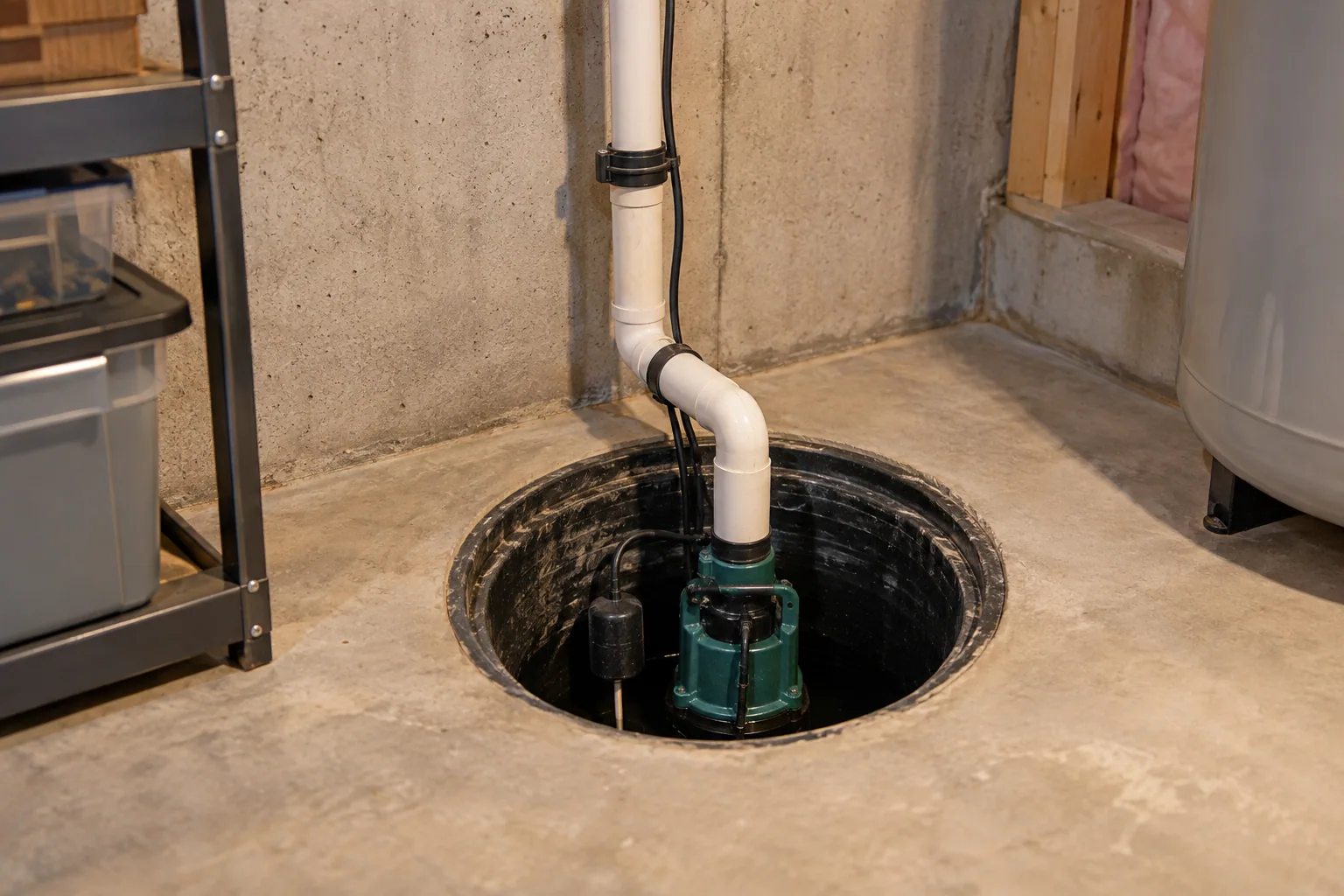
For equipment, note water heaters, heating or cooling components, condensate drains and nearby appliances without dismantling them. Ask the relevant service professional to inspect the suspected system. A wet pipe can be carrying water from another location, and a dry-looking joint at one visit may not settle an intermittent problem. The report should separate confirmed defects from items that still need observation.
Plan restoration after the source investigation
Stopping the source is followed by assessment of affected flooring, wall finishes, insulation and stored belongings. Ask which materials were exposed and whether contamination changes the cleanup plan. A restoration professional can help define drying and removal needs, while the plumber or drainage specialist addresses the source. These scopes should connect in writing so no one assumes another contractor checked the concealed damage.
Keep the repair findings, photographs and follow-up instructions together. Revisit the location under the relevant conditions, such as comparable rain or normal appliance operation after repair. If another source becomes apparent, update the record rather than dismissing the first work as automatically useless. Basements can have overlapping problems; the goal is to document what each intervention changed and what evidence remains unresolved.
Your field checklist
- Stay clear of electrical and potentially contaminated water hazards.
- Record the first known wet location and any uncertainty.
- Compare weather and household water use without repeating a suspected leak.
- Interpret meter observations within the actual plumbing arrangement.
- Inspect roof runoff and nearby equipment as separate possible routes.
- Coordinate source repair with material assessment and follow-up.
A few common questions
Can a water meter rule out every plumbing leak?
No. It may help identify some supply-water loss, but drain leaks can occur only during use, and intermittent problems may not be active during the check. Automatic equipment and shared meters also affect interpretation.
Should I call a plumber or a waterproofing company first?
Use the strongest observed clue. A dripping pipe or fixture-related pattern favors a plumber; rain-related entry at the foundation favors a drainage or building-envelope assessment. If the source is unclear, describe the evidence and ask for an investigation rather than committing to a system.
Is clear basement water safe to clean up myself?
Appearance does not establish its source or contamination. Electrical conditions, sewage involvement, extent and affected materials matter. Keep clear when those conditions are uncertain and get the appropriate assessment.
Sources & further reading
- Fix a Leak Week: Household Leak ChecksU.S. Environmental Protection Agency
- Leak Detection and Flow Monitoring DevicesU.S. Environmental Protection Agency
- Protect Yourself From Electrical HazardsCenters for Disease Control and Prevention
- A Brief Guide to Mold, Moisture and Your HomeU.S. Environmental Protection Agency
- Preservation Brief 39: Controlling Unwanted Moisture in Historic BuildingsNational Park Service
This guide supports informed conversations about your home. Conditions, materials and local requirements vary; an on-site assessment is necessary for decisions about a particular property.