The useful starting point
Efflorescence is a surface deposit of salts associated with moisture movement. It is not the same thing as mold, although appearance alone may not identify every white mark. Record the pattern, investigate the water source and assess the masonry before choosing cleaning, repointing or a coating.
What the white material may be telling you
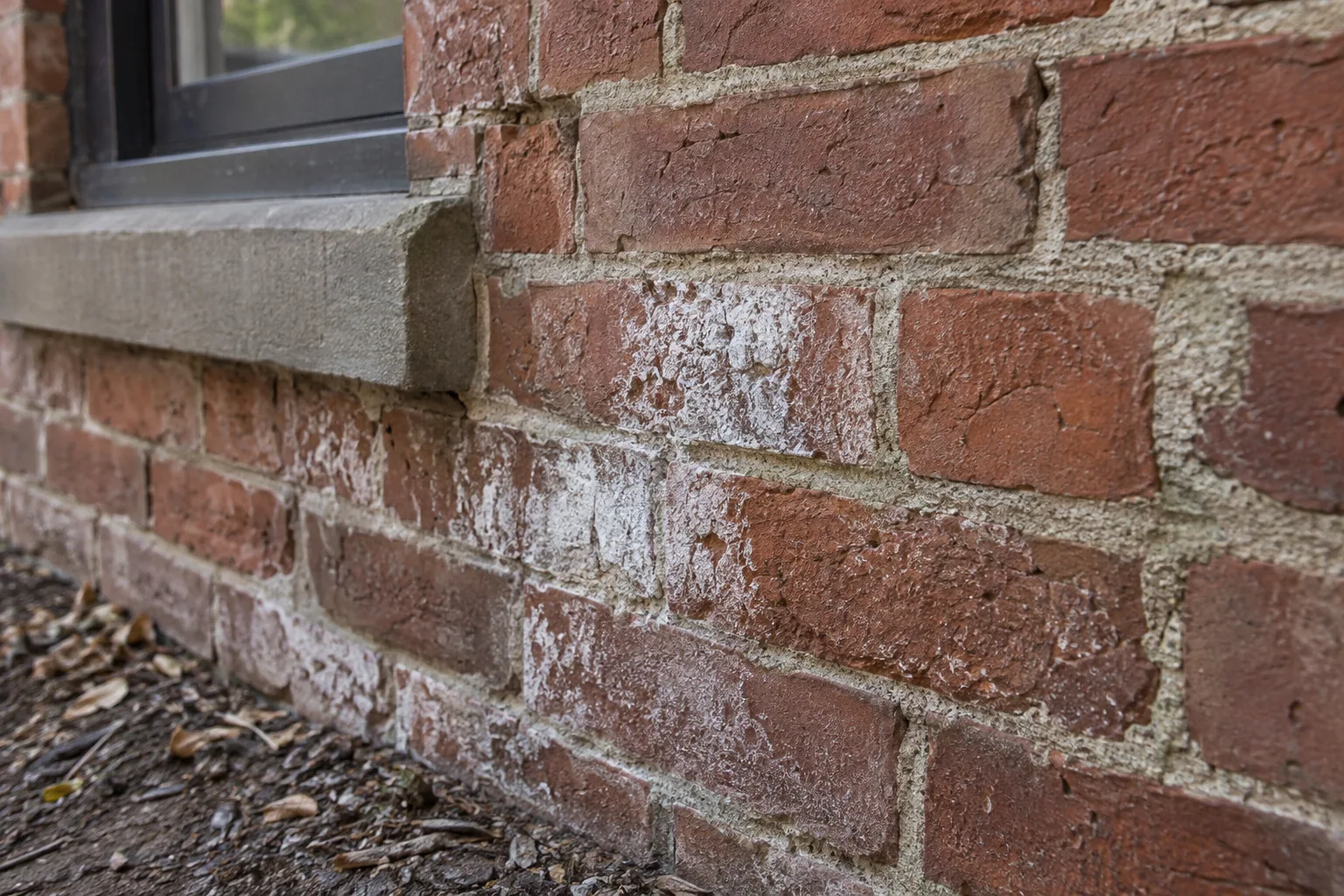
Water can dissolve salts in or around masonry and carry them toward a surface. When the water evaporates, salts may remain as a pale deposit known as efflorescence. The National Park Service's masonry glossary describes this process and distinguishes it from other deterioration. The visible bloom is evidence to investigate, not a complete explanation of where water entered.
Not every white mark on brick is necessarily efflorescence. Paint residue, cleaning residue and other surface changes can resemble it. Avoid identifying a substance from color alone, particularly indoors where other materials are nearby. A masonry professional can examine the surface and surrounding conditions. Photograph the pattern before cleaning so you preserve the clue that prompted the investigation.
Map the deposit before choosing a treatment
Record whether the white material follows mortar joints, covers individual bricks, appears below a coping or concentrates near the base of a wall. Add a wide photograph showing windows, drains, pavement and roof edges. Repeated deposits beneath one runoff point may guide a different investigation from a broad basement pattern.
Note recent work as well as weather. Repointing, cleaning, new paving or changes in drainage may be relevant to the timing. Compare the wall after later rain and during drying, using the same camera position where practical. Do not interpret disappearance during wet weather as proof that the cause has gone away. The useful question is whether the pattern returns and whether the surrounding masonry is changing.
| Location or change | Inspection lead | Record to keep |
|---|---|---|
| Below a roof edge or coping | Water-shedding details above | Exterior context and rain timing |
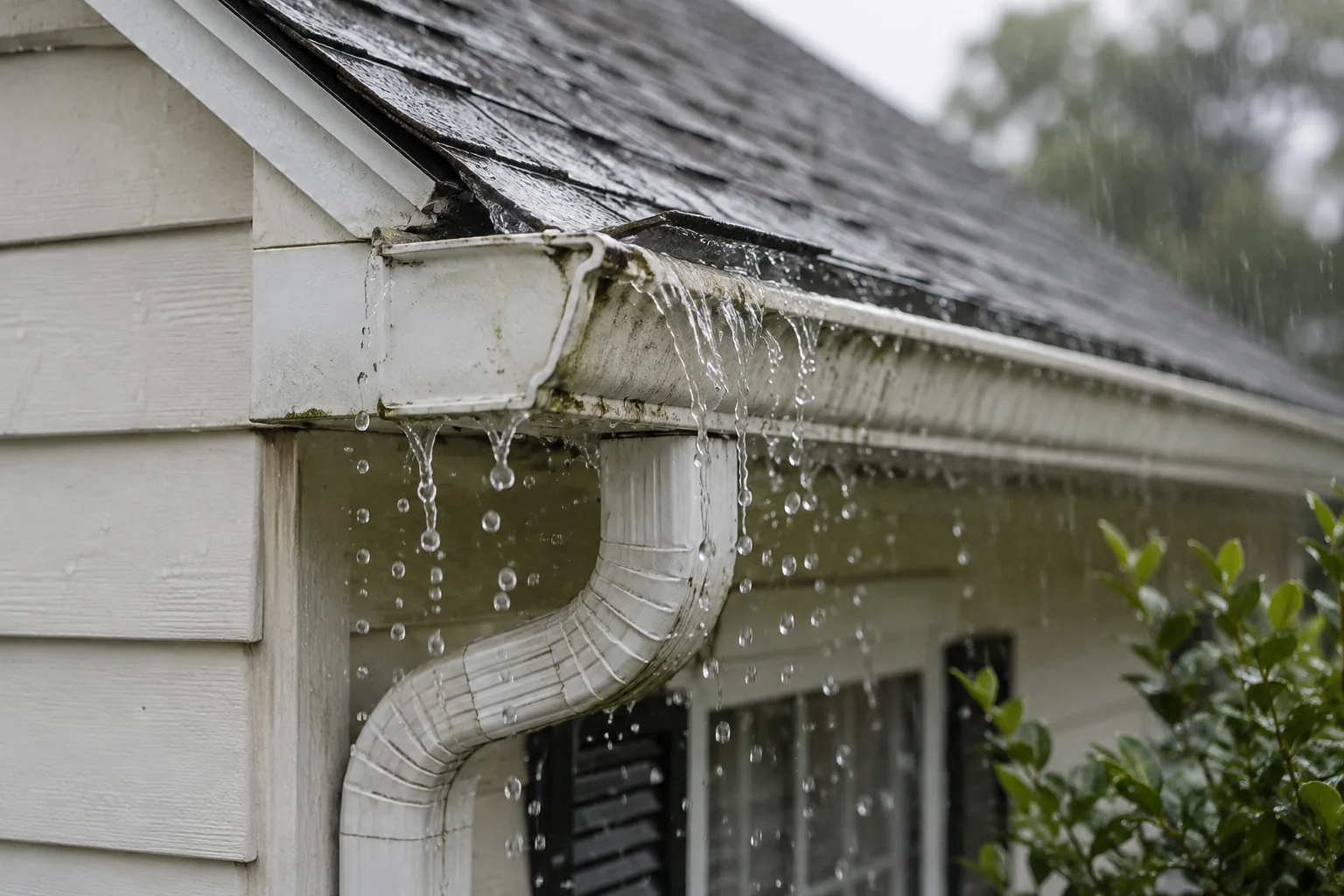
| Near a downspout | Overflow or discharge problems | Drainage route and wet areas |
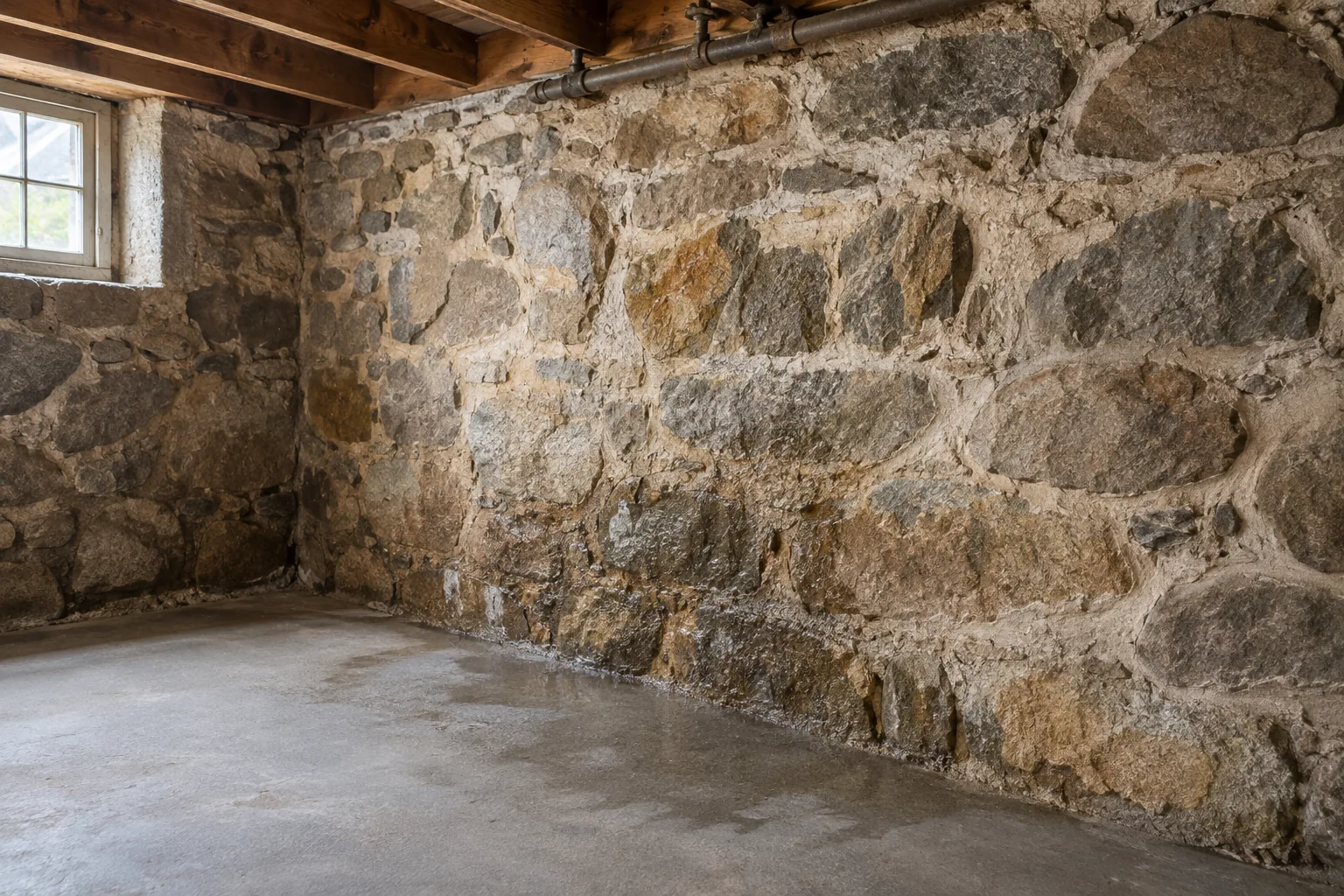
| At the base of a basement wall | Moisture entry and evaporation | Wall-floor pattern over time |
| After masonry cleaning | Treatment residues and rinsing history | Products and contractor records |
Separate a surface deposit from material damage
A powdery surface and a crumbling brick face should not be recorded as the same problem. Look for flaking, missing mortar, displaced units or changes in cracks from a safe location. Salts and repeated wetting can accompany deterioration, but a photograph cannot establish the structural significance of the damage. Ask the assessor to explain which observations require repair and which can be monitored.
Loose masonry above a walkway or a visibly moving wall needs prompt professional attention and protection of the area below. For stable localized deposits, there is usually more value in a careful source investigation than in aggressive immediate cleaning. Keep the distinction clear in an estimate: cleaning appearance, correcting water entry and repairing damaged masonry are separate tasks with different evidence of completion.
Avoid turning cleaning into a second problem
A stubborn white deposit is not a reason to reach for acid, a pressure washer or an abrasive tool. Brick and masonry finishes vary. The wrong treatment can alter the surface and leave additional moisture or residues behind. The National Park Service's cleaning guidance calls for examining the material, choosing a suitable method and testing it before treating a large area.
Ask for a small trial area and a written description of the product, method and protection of adjacent materials. The contractor should explain what appearance can reasonably be achieved without damaging the brick. If the deposit returns because the moisture source remains, repeated cleaning can become a maintenance cycle that never addresses the cause. A clean sample should therefore be reviewed alongside the water-management plan, not in isolation.
Question coatings and hard mortar patches
A clear coating or paint can change how a wall wets and dries. Ask why a proposed treatment is suitable for this particular masonry and what source it is intended to control. It should not substitute for repairing a defective gutter, flashing or joint. A proposal that promises to stop all moisture without discussing entry and drying deserves more explanation.
If repointing is recommended, ask how the mortar will match the existing masonry in relevant properties as well as appearance. Older brick and stone can be damaged by incompatible repair choices. The National Park Service's repointing brief emphasizes compatibility and careful preparation. Request photographs of existing patches and a description of which joints actually need work, rather than treating a whole elevation as defective because one area has white deposits.
Judge success by the wall's behavior
After source repairs, keep observing the same areas under relevant weather. Some visible salts may remain even when a particular leak has been corrected, so appearance alone is not a complete performance test. Ask the masonry professional how the condition should be evaluated and when cleaning, if appropriate, fits into the sequence.
Keep the repair specification, photographs and maintenance instructions together. Record any new deposit alongside changes in wetting, mortar or brick condition. If a pattern returns, compare it with the original rather than immediately buying another sealer. The next investigation should build on what was learned: which water routes were corrected, which areas remained concealed and which symptoms changed after the work. That record makes a recurring problem easier to discuss precisely.
Your field checklist
- Photograph the deposit before cleaning.
- Map its location relative to roof edges, drains, windows and ground level.
- Record material loss separately from surface discoloration.
- Ask for material-specific cleaning and a trial area.
- Require a clear reason for coatings or repointing.
- Monitor the wall after source repairs under comparable conditions.
A few common questions
Is efflorescence mold?
No. Efflorescence refers to salt deposits, while mold is biological growth. A white appearance alone may not reliably identify an unknown mark, so seek an assessment when the material or condition is uncertain.
Does it mean the wall is failing structurally?
A salt deposit alone does not establish structural failure. Movement, displaced masonry, changing cracks or loose material require their own assessment. Describe these observations separately rather than treating every white patch as equally serious.
Will sealing the brick keep the salts away?
A coating is not a universal remedy. Its suitability depends on the masonry, moisture routes and drying conditions. Ask how the proposal addresses the source and what consequences the treatment may have for the wall.
Sources & further reading
- A Glossary of Historic Masonry Deterioration Problems and Preservation TreatmentsNational Park Service
- Preservation Brief 1: Cleaning and Water-Repellent Treatments for Historic MasonryNational Park Service
- Preservation Brief 2: Repointing Mortar JointsNational Park Service
- Preservation Brief 39: Controlling Unwanted Moisture in Historic BuildingsNational Park Service
This guide supports informed conversations about your home. Conditions, materials and local requirements vary; an on-site assessment is necessary for decisions about a particular property.