The useful starting point
Give the intersections of a Victorian house more attention than its ornament alone. Roof valleys, porch connections, window bays and additions deserve individual records. Investigate repeated paint failure or water stains before replacing decorative work, and establish which details can be repaired safely.
Make an inventory of the parts that project
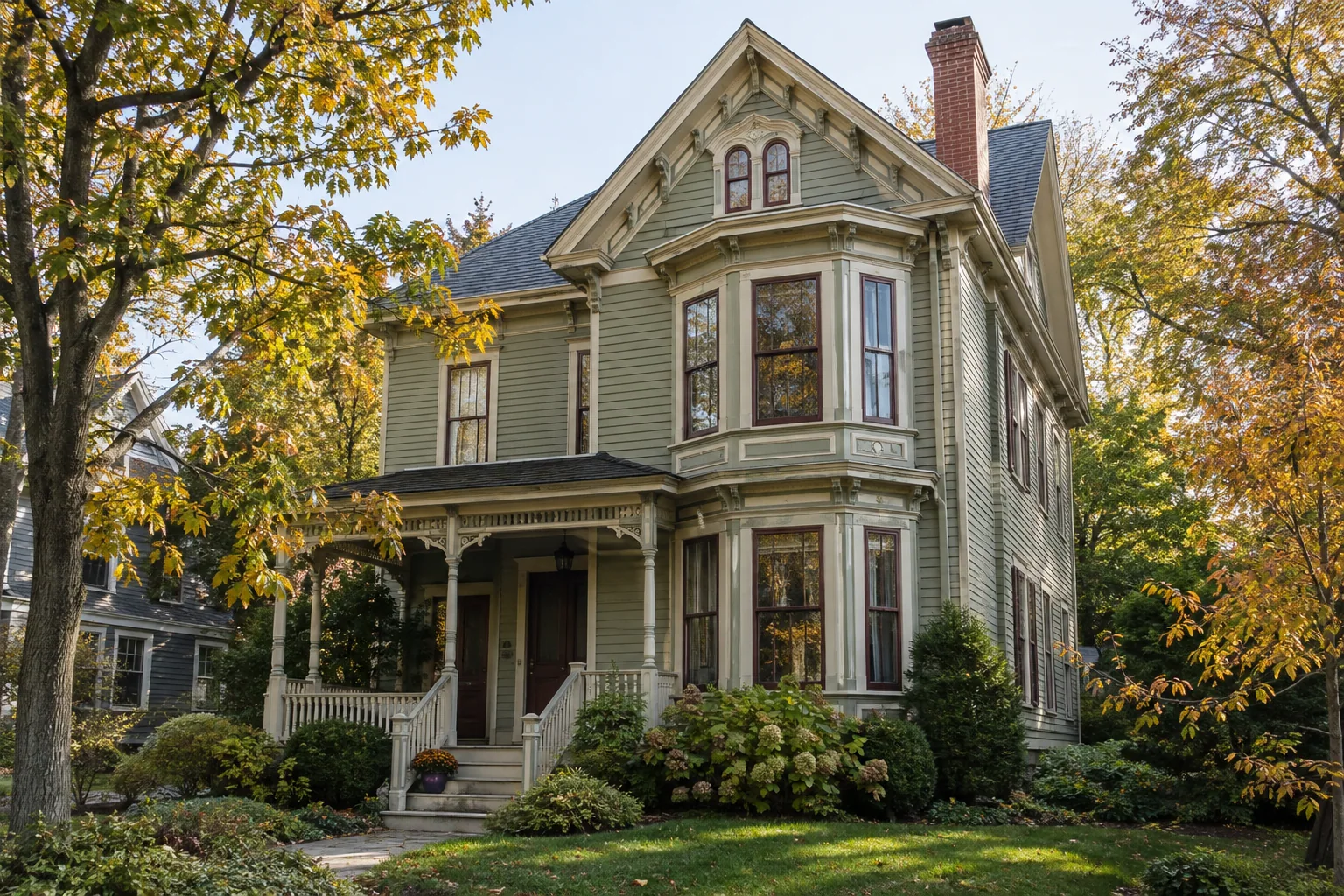
Begin with a set of exterior photographs taken from safe, accessible positions. Label the main roof, porch roof, bay windows, dormers, chimneys and additions. Several may meet above the same room. When water appears indoors, that record gives an inspector a useful starting point and reduces the chance that the most obvious decorative feature gets blamed without investigation.
The rear of the house deserves the same record as the front. An enclosed porch, a converted service room or a later addition may use different roofing and wall materials. Mark any changes you know about, including replacement windows and recently enclosed rooms. Leave uncertain work labeled as uncertain: Victorian styling cannot reveal whether the concealed flashing, wiring or insulation still follows the original arrangement.
Inspect roof junctions as individual details
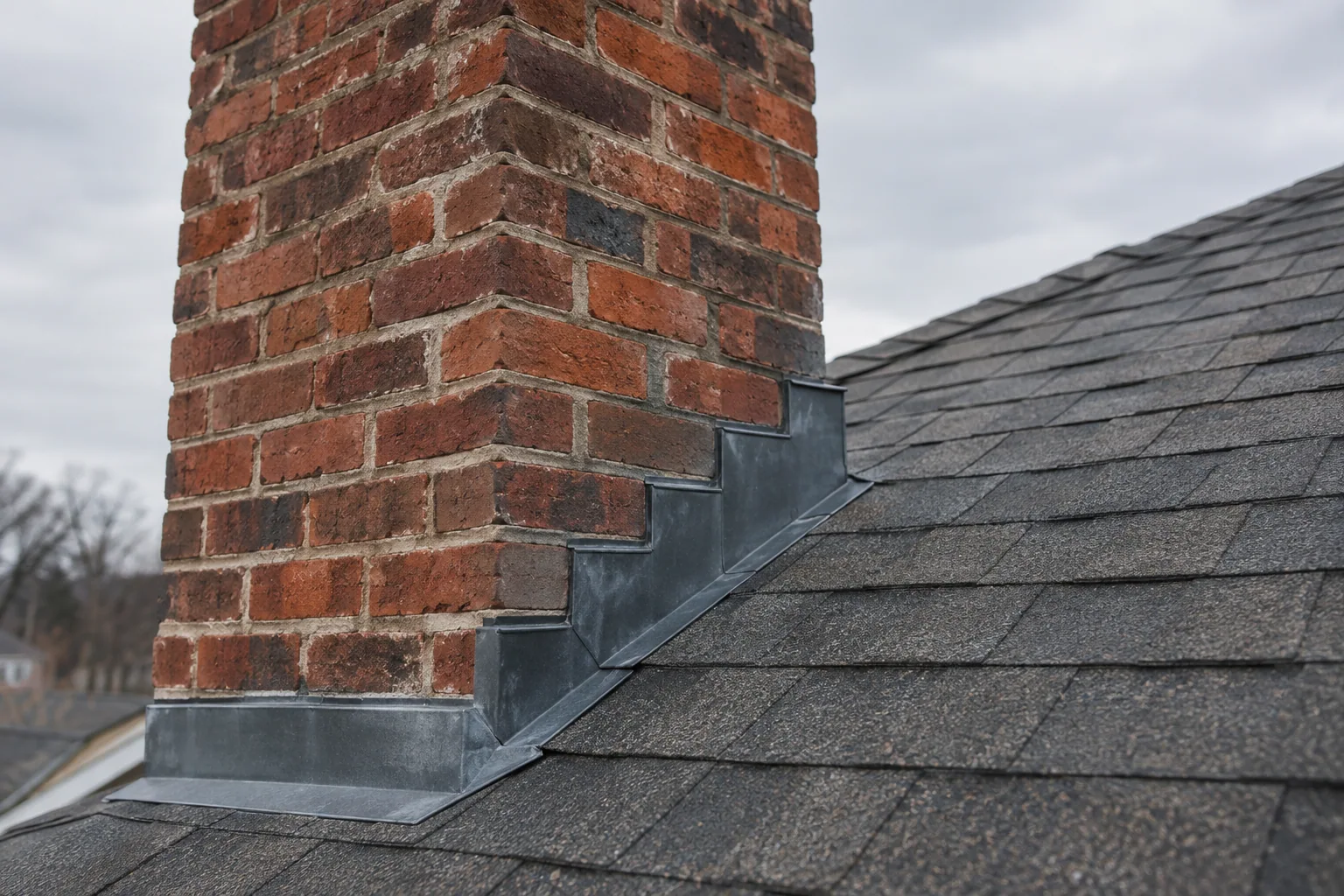
A complicated roof has more locations where water must change direction. Ask a roofer to document the condition of valleys, wall intersections, penetrations and transitions between roof materials. Request photographs rather than attempting roof access yourself. A repair proposal should name the detail involved and describe how it connects to adjacent surfaces; 'seal roof' does not explain much.
Discuss the age and condition of the covering separately from the flashing. One damaged junction does not automatically establish that the entire roof needs replacement, and a new covering does not excuse leaving a failing connection underneath it. The National Park Service's roofing brief supports evaluating the existing roof before selecting repairs. If a ceiling is actively leaking, source control and assessment of wet materials should proceed before any long-term preservation decision.
Read paint failure without treating it as a diagnosis
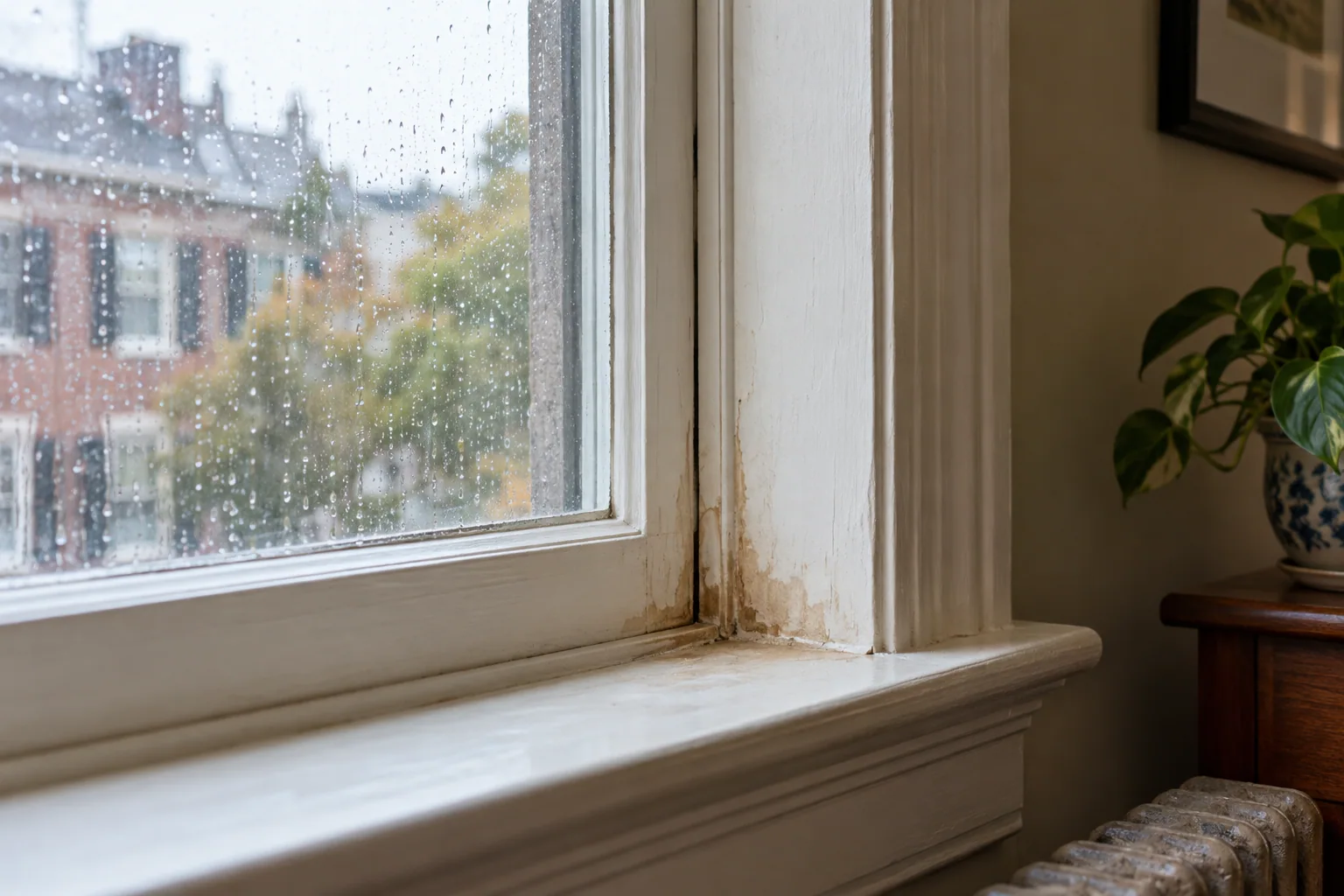
Repeated peeling at the bottom of a window, on a porch post or beneath a gutter deserves a closer look. Compare the location with nearby surfaces that remain sound. Note whether the failure returned after recent painting and whether the underlying wood appears distorted or damaged. These observations help distinguish a maintenance coating problem from a location that keeps getting wet, but appearance alone cannot settle the cause.
Ask the contractor what must be corrected before repainting. That may include a drainage detail, deteriorated joint or another source that needs investigation. The National Park Service's exterior-paint guidance explains why preparation and the condition beneath the coating matter. In older houses, painted surfaces also require a lead-safe work discussion. Do not turn a small diagnostic question into uncontrolled sanding or scraping around occupied rooms and gardens.
| Where the symptom appears | What to record | What the repair scope should address |
|---|---|---|
| Below a gutter corner | Weather and overflow pattern | Drainage and affected wood |
| At a bay-window ceiling | Interior location and roof geometry | Roof-wall and window connections |
| At a porch post base | Visible deterioration and water collection | Condition, support and water shedding |
| On ornate trim | Which pieces fail repeatedly | Source of wetting and repairable material |
Separate decorative condition from structural condition
A missing trim piece and a failing porch support may be close together but call for different responses. Loose overhead components, visibly moving railings or an unstable porch need prompt assessment and restricted access. Do not test a suspect assembly by leaning on it. A qualified professional can decide whether a structural evaluation is required and how the area should be made safe.
For stable decorative work, ask for an itemized repair approach. Which pieces can remain? Which need localized repair? Can a damaged element be documented before removal so a replacement matches the intended profile? Request separate prices where reasonable. This makes preservation a practical decision about actual components, rather than an all-or-nothing argument between keeping everything and stripping the house to a simpler outline.
Include the rooms that changed use
An enclosed porch used as an office, a finished attic and a bathroom inserted into an older bedroom can change where moisture is produced and how heat reaches the roof. Collect permits, invoices and plans when available. Have the investigator examine the current construction instead of assuming that the room works like an ordinary part of the original house.
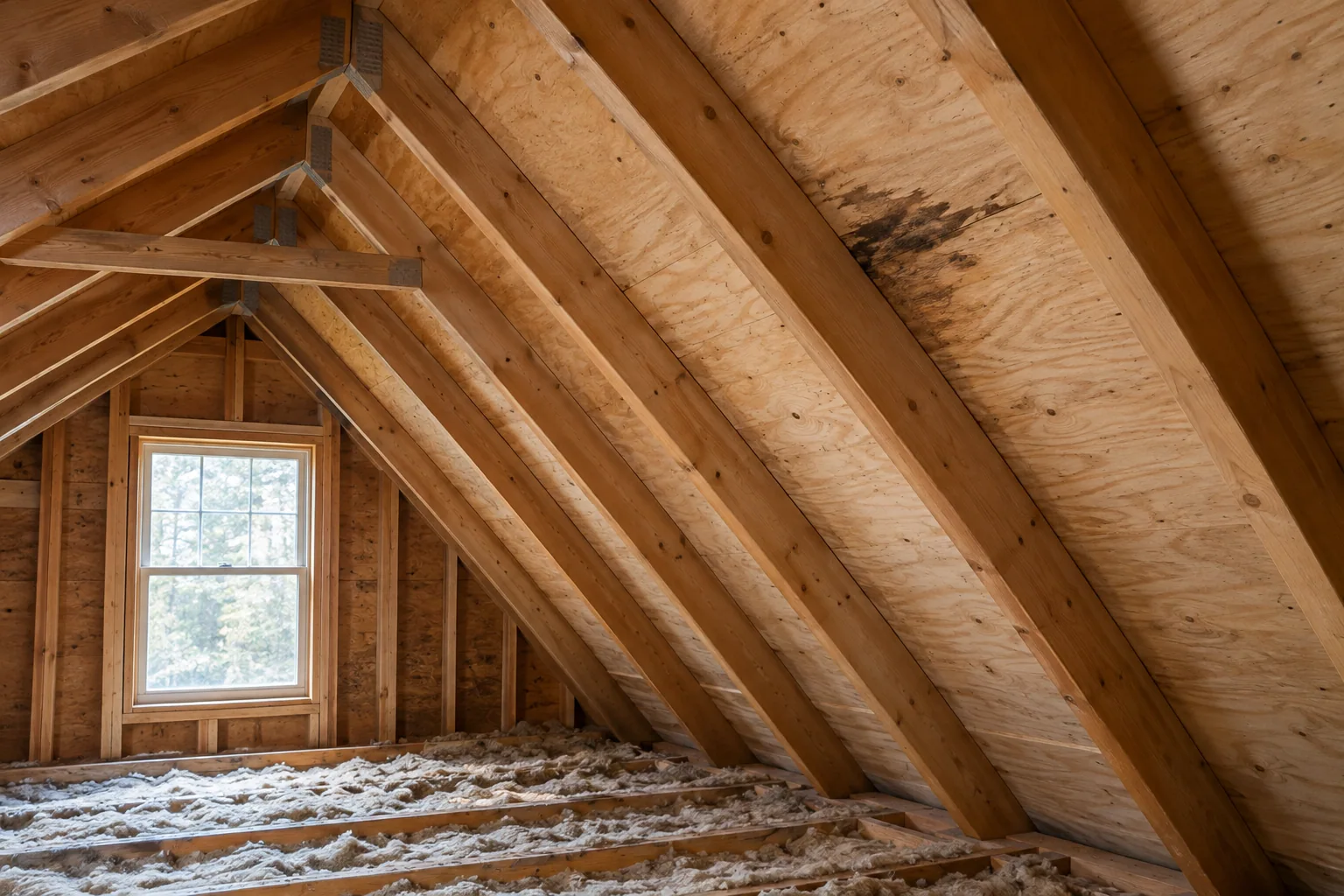
For an attic complaint, ask where exhaust air goes and how the roof assembly is insulated and ventilated. For a damp enclosed porch, document the floor, wall and roof junctions as well as the windows. Improving comfort may involve more than adding insulation. Repairs should account for moisture, ventilation and safe treatment of existing materials before the room is closed again. A visible stain is the beginning of this discussion, not a complete specification.
Set the order of work before choosing finishes
A useful order is to address safety, stop active water entry, assess affected materials and then plan the finish repairs. Within that process, save records of details that matter to the house: window profiles, trim patterns, flooring and plaster transitions. Ask the restoration contractor to identify anything that must be opened or removed before it happens, except where immediate action is needed for safety.
Schedule exterior repairs and interior decorating together so a freshly restored room is not exposed to an unresolved roof or wall problem. For protected properties, confirm the relevant local review before changing exterior features. Keep a small maintenance file for each complicated junction, with photographs and dates. When a future painter or roofer arrives, that file tells them what has already failed, what was changed and what still needs watching.
Your field checklist
- Photograph each bay, dormer, porch and roof transition.
- Record repeated paint failure before preparing the surface.
- Arrange assessment of loose overhead trim or unstable porch components.
- Identify alterations that changed attic or porch use.
- Discuss lead-safe practices before disturbing older paint.
- Keep source repair, material assessment and finish repair distinct in the scope.
A few common questions
Does Victorian style mean the house is legally historic?
No. Architectural appearance does not establish a property's designation or approval requirements. Check the address with the relevant municipal preservation and building offices before planning visible changes.
Should damaged decorative wood always be replaced?
The answer depends on condition, safety, function and the extent of deterioration. Ask a contractor experienced with the material to explain repairable areas and provide a reason for each proposed replacement.
Can insulation solve a cold room in a bay or converted porch?
It may be part of the solution, but the assembly needs assessment first. Air leakage, moisture entry, existing insulation and connections to the main building can all affect the result. Ask for a plan that addresses the whole enclosure.
Sources & further reading
- Preservation Brief 4: Roofing for Historic BuildingsNational Park Service
- Preservation Brief 10: Exterior Paint Problems on Historic WoodworkNational Park Service
- Preservation Brief 45: Preserving Historic Wood PorchesNational Park Service
- Renovation, Repair and Painting Program: ConsumersU.S. Environmental Protection Agency
This guide supports informed conversations about your home. Conditions, materials and local requirements vary; an on-site assessment is necessary for decisions about a particular property.