The useful starting point
Stop using the washer and arrange safe source control. Record when water appears and have a technician distinguish appliance, supply-hose and drain problems. If water leaves the laundry area, inspect connected floor and wall assemblies and the room below. Repairing the washer does not establish that the building has dried.
The cycle stage is useful evidence
When did the water appear: during filling, washing, draining, or while the machine sat unused? Give the service provider that sequence, along with any error code. It can help narrow the inspection. Do not run another load to reproduce a leak that could reach wiring or the ceiling below. Keep the machine out of use until it has been assessed.
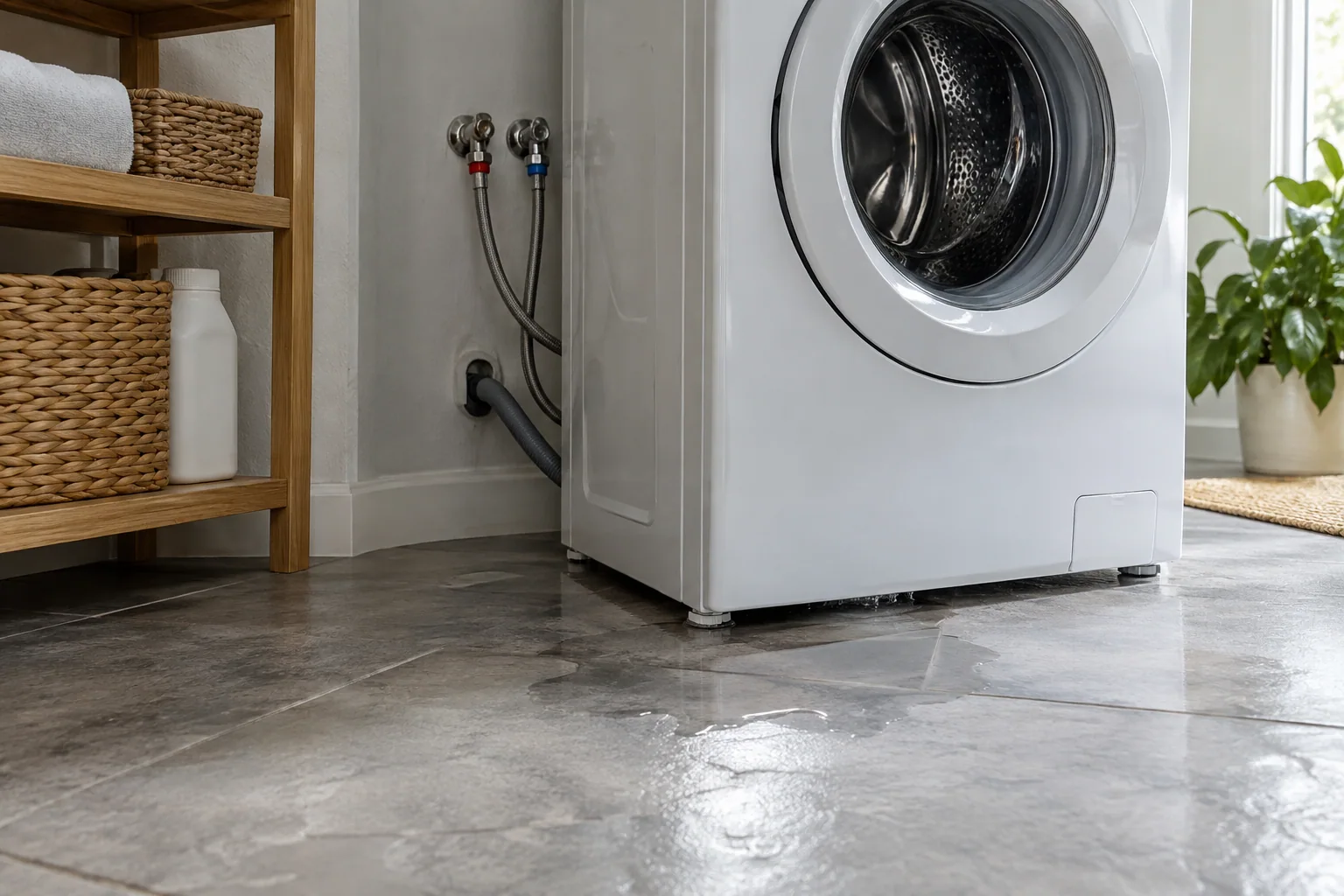
GE's troubleshooting notes that washer leaks can have several causes and that location can offer clues. A puddle near the front does not prove the front seal is responsible, because water may travel underneath the appliance. Give the technician the sequence rather than a diagnosis. A concise record of what happened is more valuable than a replaced part chosen from a photograph alone.
Separate the appliance from the plumbing
Supply connections, the appliance itself and the household drain are distinct parts of the system. Ask who will assess each one. An appliance technician may identify a machine problem, while a plumber may need to address a blocked or unsuitable drain connection. The service record should say which parts were checked and which remain outside that contractor's scope.
Follow the model's installation instructions for any correction. Drain height, routing and connection details vary, so avoid copying a setup from another washer or adjusting hoses by guesswork. GE specifically directs owners to model-specific drain instructions. Have the qualified installer confirm the arrangement and record the correction, especially after a machine has moved or a laundry closet has been remodeled.
| Possible area of concern | Useful observation | Professional question |
|---|---|---|
| Water supply | Water appears outside a running cycle | Were valves, hoses and connections checked? |
| Machine components | Leak coincides with a particular stage | What defect was confirmed? |
| Household drain | Water appears during discharge or at the standpipe | Does the drain function and match installation requirements? |
| Building assembly | Stain or moisture appears below the laundry | Which connected cavities need inspection? |
Avoid turning a connection problem into a larger release
Do not drag a heavy washer forward while hoses and cables remain connected. A tight closet can make the shutoffs hard to reach, and moving the machine may place stress on the very connection that is leaking. Arrange safe isolation and access. If standing water surrounds plugs or cords, stay out and request an electrical assessment rather than reaching behind the appliance.
Keep the route clear for the service team without moving contaminated or soaked materials through the house. Tell the provider about stacked equipment, narrow stairs or limited clearance. A multiunit building may also require management access to a shared shutoff. These practical details can determine which personnel are needed and prevent an appointment ending before the source can be safely reached.
Trace the water below and beside the laundry
Inspectors should consider the wall behind the machine, the floor perimeter, nearby closets and the room underneath. A second-floor laundry in a converted house can send water into a different apartment; a basement laundry can expose finished wall bases and storage nearby. Ask for the affected area to be mapped rather than restricting the inspection to the footprint of the machine.
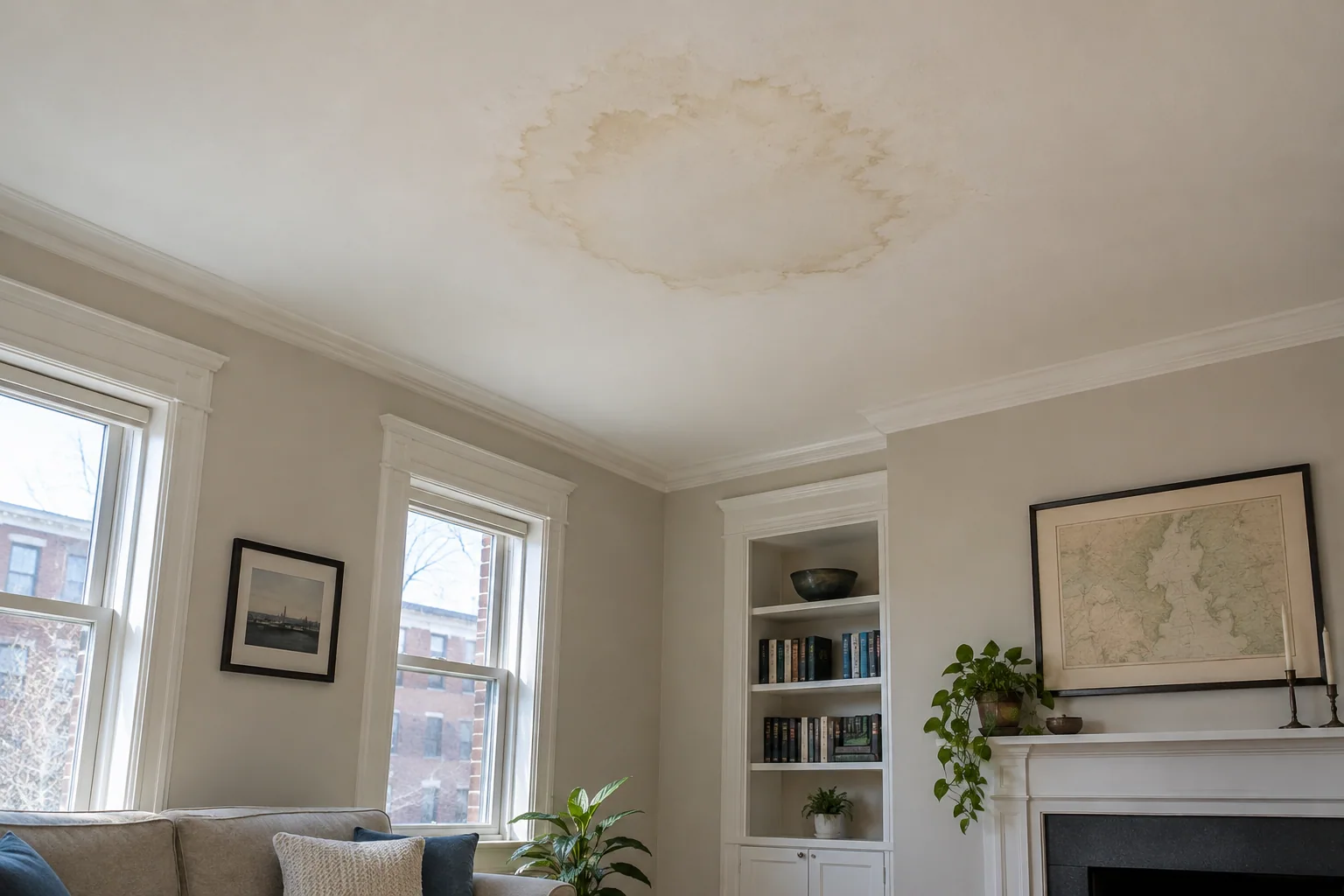
If the ceiling below is stained or sagging, keep people clear and notify the responsible owner or manager. Do not puncture it to release water. Ask a qualified contractor to assess the ceiling and concealed cavity. Record which room sits above it and when the stain appeared; those details help coordinate the appliance service with the building investigation.
Decide what the laundry finishes need
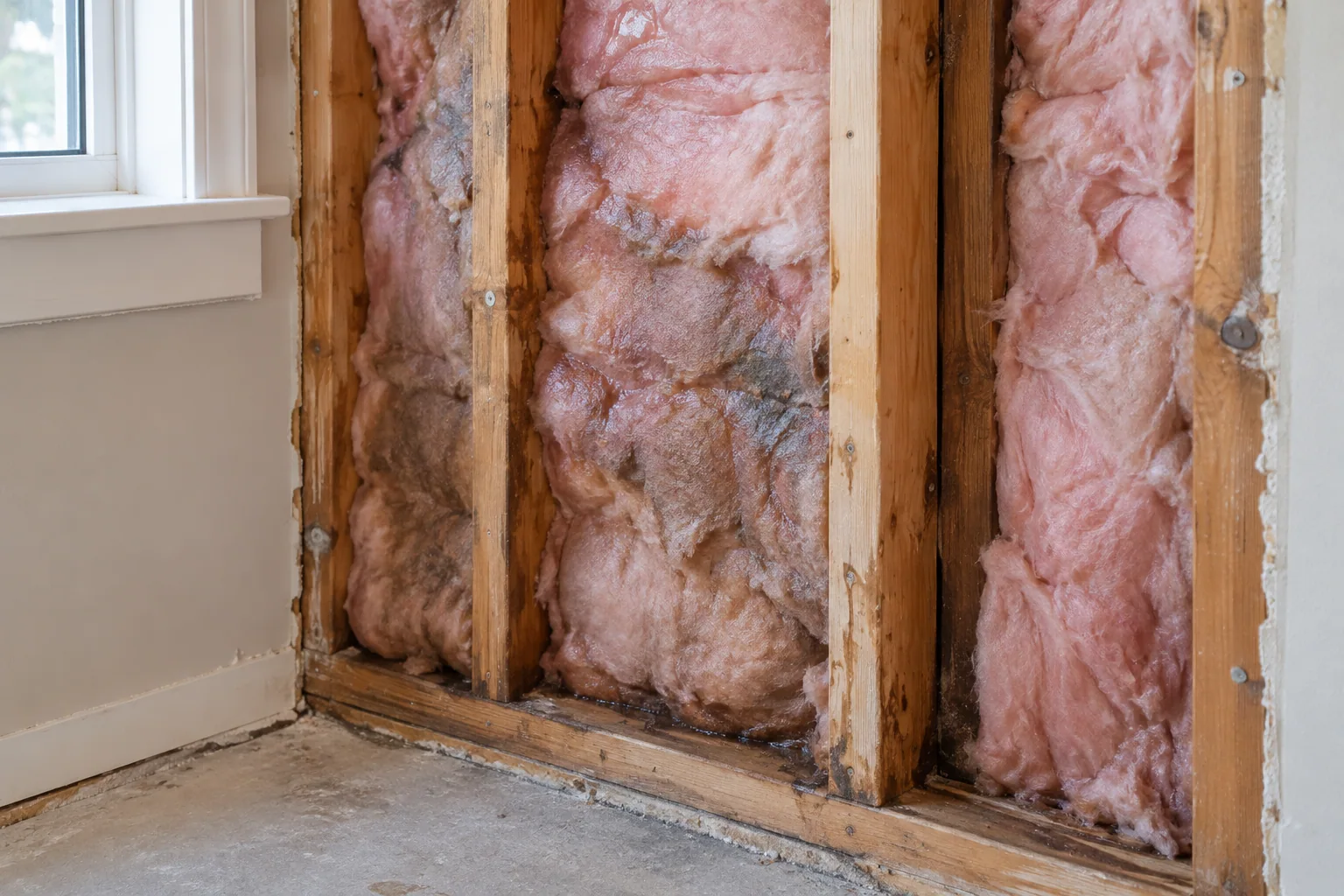
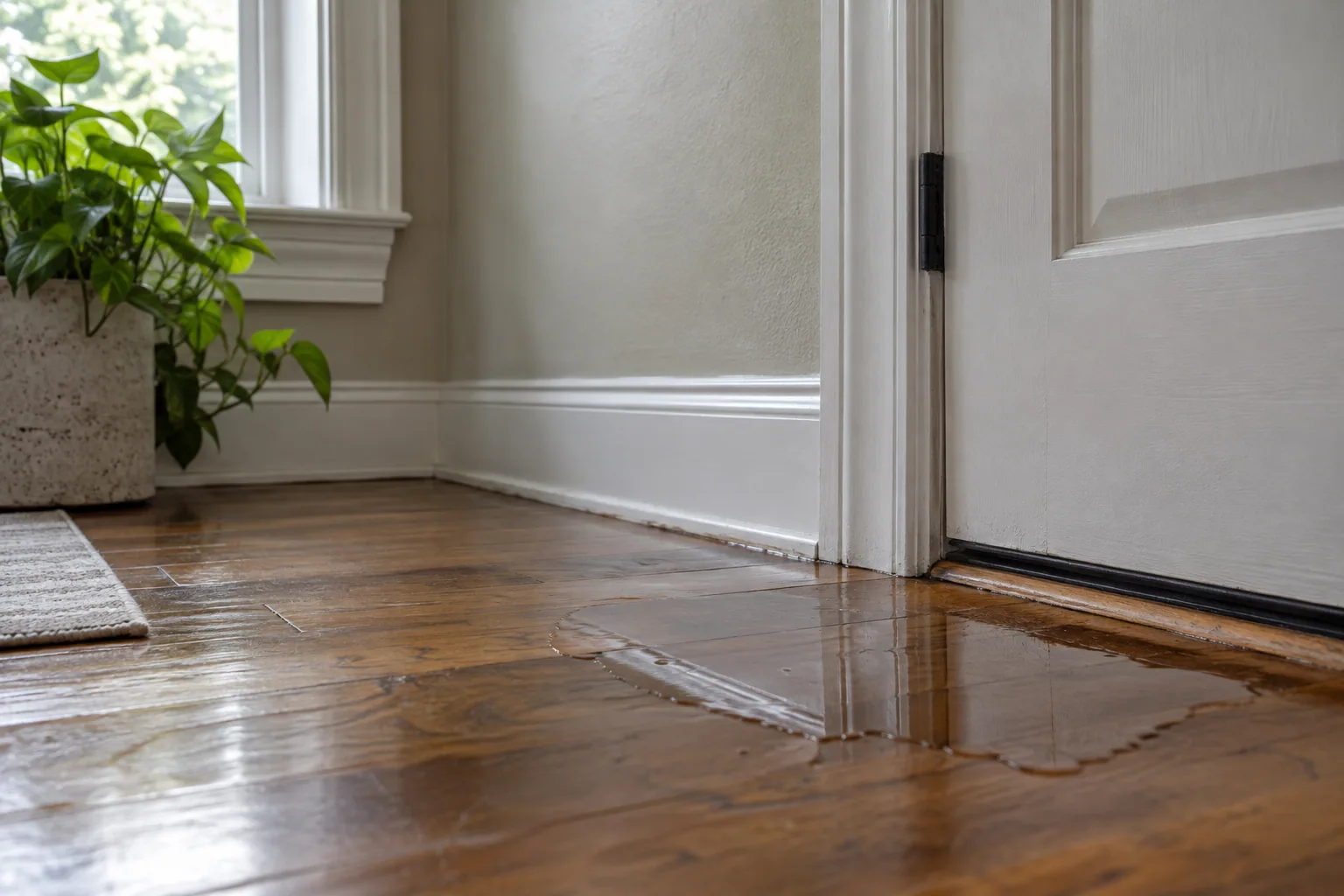
The floor covering, underlayment, baseboards and wall insulation may need different treatment. Ask which materials can remain, which require removal and how inaccessible layers will be checked. A tile surface may conceal a different substrate from the wood floor in the next room. The inspection needs to account for those transitions because water does not stop at the change in finish.
Before opening older floors or painted walls, ask how unknown materials will be evaluated for appropriate handling. This is especially relevant in a laundry added to a much older house. New appliances do not make surrounding construction new. The removal scope should include containment and debris handling, with separate attention to any material requiring specialist assessment.
Use a clear sequence for drying and reinstallation
The machine may need to remain out of its recess while the floor or wall is inspected and repaired. Decide who moves it, where it will be stored and who reconnects it. Request the drying findings before finish work closes the area. Then have the qualified installer verify the water and drain connections when the appliance returns, rather than assuming the earlier repair covers a later reconnection.
If two contractors are involved, give both the same written sequence. Ask whether the first provider's warranty or service requirements depend on who performs the reinstallation. Keep that information with the estimate. A coordination problem is easier to resolve before a heavy appliance is back in a tight closet than after the first post-repair load reveals another leak.
Review prevention while the connections are accessible
Ask about the condition of the supply hoses, the location of shutoffs and any model-specific inspection or replacement instructions. A water sensor or automatic shutoff may be worth discussing with a qualified installer, but the arrangement should fit the room and actual plumbing. A pan beneath a machine also needs an appropriate design; the presence of a pan does not establish protection against every leak.
Make a short record of the installation and emergency contacts. In a shared building, clarify how residents report laundry leaks and who can access the relevant shutoff when the owner is absent. Keep the floor around the machine observable where practical. A recurring damp patch, loose connection or changed drain behavior is easier to address when someone notices it before the next unattended wash.
Your field checklist
- Stop washer use and record the stage when the leak appeared.
- Arrange safe access without pulling connected equipment through water.
- Have appliance, supply and drain issues distinguished in writing.
- Inspect adjacent spaces and the room below where water could travel.
- Coordinate drying, repairs and qualified reconnection.
- Review the model's installation and maintenance requirements.
A few common questions
Does a drain pan make an upstairs washer safe from leaks?
A pan is only one component of a properly designed installation. Ask the installer what water it can collect, where that water goes and what happens if a supply connection fails. Do not treat it as a guarantee against damage.
Who checks a leak that happens only while draining?
Tell both the appliance service provider and plumber what you observed. The machine's drain components and household drainage may need separate checks. Avoid assuming the washer is defective before the drain arrangement is evaluated.
Can I use the washer once the hose is replaced?
Have the service provider verify the repair and safe operation. If water reached the building, coordinate use with the drying or repair contractor so the machine does not block access or sit on a floor that is not ready for normal service.
Sources & further reading
- Washer: Leaking TroubleshootingGE Appliances
- Washer: Drain Hose InformationGE Appliances
- Reasons Why Your Washing Machine Is LeakingWhirlpool
This guide supports informed conversations about your home. Conditions, materials and local requirements vary; an on-site assessment is necessary for decisions about a particular property.